
How to Win with LLM Optimization in Modern Commerce
A practical guide for DTC brands and local businesses to prepare for AI-driven product discovery and recommendation systems.
When a customer asks ChatGPT "What's the best organic skincare routine for sensitive skin under $100?", they're not searching - they're shopping. The AI doesn't return ten blue links. It delivers a curated recommendation with reasoning, comparisons, and next steps.
This shift from search to conversation is reshaping how products get discovered. For DTC brands and local businesses, the question isn't whether this change will happen - it's whether you'll be ready when it does.
Why AI Product Discovery Matters Now
Traditional product discovery followed a predictable path: awareness, consideration, comparison, purchase. AI compresses this journey into moments. A single conversation can encompass research, evaluation, and recommendation.
Consider how this plays out for different business types:
For DTC Brands
A sustainable clothing brand like Everlane benefits when AI can confidently explain: "This organic cotton t-shirt uses 95% less water than conventional cotton, fits true to size based on 2,000+ reviews, and comes with a lifetime repair guarantee." The AI becomes an informed sales associate who never sleeps.
For Local Businesses
When someone asks "Where can I get a good manicure near downtown Portland that uses non-toxic polish?", a nail salon with well-structured information appears in the recommendation. The salon that only lists "manicures available" gets overlooked - not maliciously, but because the AI has less to work with.
The Three Pillars of LLM Optimization
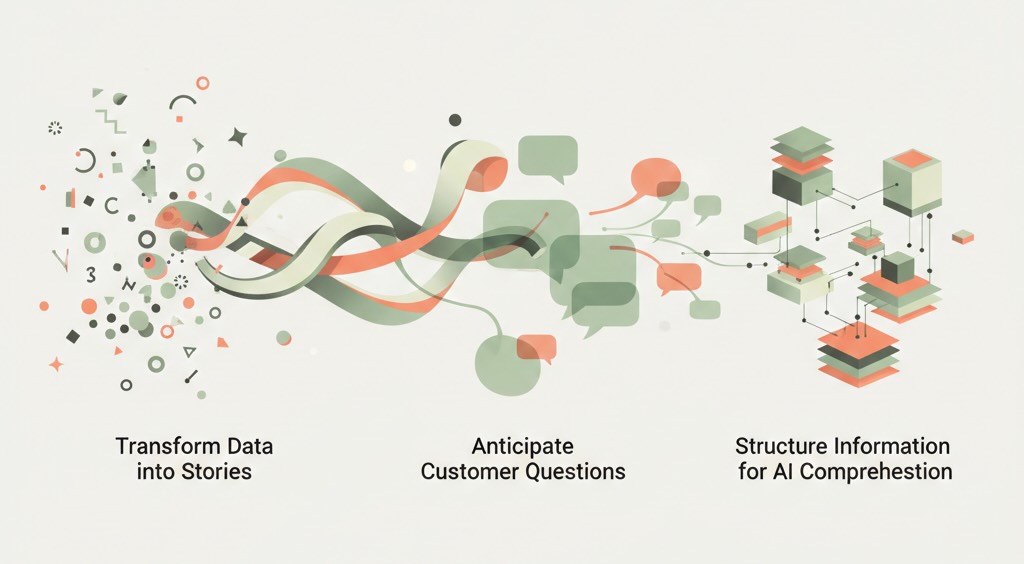
1. Transform Data into Stories
Raw specifications don't persuade. Context does. Instead of listing "Stainless steel, 16 oz capacity," describe "Double-wall stainless steel construction keeps coffee hot for 6 hours and cold drinks chilled for 12 hours."
Example: Coffee Subscription Service
Before (Raw Data):
Single origin, medium roast, 12 oz bag, $18
After (Story-Driven):
Ethiopian single-origin with bright citrus notes, roasted weekly in small batches. Perfect for pour-over brewing. Each 12 oz bag supports fair-trade farming cooperatives.
2. Anticipate Customer Questions
AI assistants field the questions customers actually ask, not the keywords they type. Think conversationally:
Instead of optimizing for "wireless headphones": Prepare for "What are the best wireless headphones for working out that won't fall out?"
Instead of "restaurant menu": Be ready for "What's a good date night restaurant in Brooklyn with vegetarian options under $50 per person?"
3. Structure Information for AI Comprehension
Large language models excel at understanding relationships and context. Help them by organizing information logically:
Example: Local Restaurant
Cuisine & Atmosphere:
Farm-to-table Italian in a cozy, candlelit setting perfect for date nights and celebrations
Dietary Accommodations:
Extensive gluten-free pasta options, creative vegan dishes, and can modify most items for dietary restrictions
Price & Logistics:
Entrees $18-28, reservations recommended, validated parking available, 15-minute walk from Metro Center
Practical Steps to Get Started
For DTC Brands

Audit your product descriptions: Can someone understand the value proposition in one sentence? If not, rewrite with benefits first, features second.
Create comparison guides: Help AI understand how your products differ from competitors. "Unlike traditional protein powders that use artificial sweeteners, ours uses monk fruit for clean sweetness without the aftertaste."
Build FAQ content: Document the questions your customer service team answers repeatedly. These become AI training data.
For Local Businesses

Describe your unique value: What makes you different from the place down the street? "Only nail salon in the area using 10-free, vegan polishes with complimentary hand massage."
Address practical concerns: Parking, accessibility, wait times, booking policies. AI assistants field these questions constantly.
Highlight specialties: "Specializes in color correction and balayage techniques, with stylists trained in curly hair care methods."
The Opportunity Ahead
LLM optimization isn't about gaming algorithms - it's about clarity. When you help AI understand your products and services accurately, you create better experiences for customers and better outcomes for your business.
The brands and businesses investing in this clarity today are building the foundation for tomorrow's discovery landscape. They're not just adapting to change - they're positioning themselves to thrive in it.
Start with one product, one service, or one frequently asked question. Make it clear, contextual, and conversational. Then expand from there. The future of commerce discovery is being written now, and you have the opportunity to help write your chapter.