

Source: CNBC
AI Agents
Payments
Banks Warn AI Shopping Agents Are Outpacing Fraud Safeguards
A coalition of major banks says AI-led shopping could increase scams, fraud and data exposure unless payment security and accountability controls catch up.
Zero Click Project curates agentic commerce news for operators tracking AI shopping agents, zero-click commerce, and the industry updates shaping how products are discovered, evaluated, and bought. Use this page to follow platform launches, retailer moves, protocol changes, and payment infrastructure developments across the emerging agentic commerce stack.
Editorial summary of the dominant themes emerging from the most recent stories in this feed.
Mastercard expects shoppers to grant agents broader authority only after repeated successful transactions, even as major banks warn that fraud and privacy safeguards are lagging. Adoption is therefore likely to advance through narrow permissions, confirmation steps and visible proof that an agent followed the shopper’s instructions. Recent examples include Banks Warn AI Shopping Agents Are Outpacing Fraud Safeguards; TikTok Adds Conversational Shopping and One-Click Checkout.
Constructor’s Stripe-powered checkout lets shoppers move from an AI recommendation to payment without leaving the assistant. Payments leaders are simultaneously calling for verifiable records of every agent action, showing that reducing checkout friction will depend on stronger evidence of authorization and accountability. Recent examples include Agentic Payments Need Verifiable Receipts of Agent Actions; IDEMIA Adds Passkeys and Scoped Tokens for AI-Agent Payments.
Shopify is opening checkout to browser-based agents and plans to connect Meta’s Muse to Shop Pay, while retailers including Amazon, Kate Spade and QVC are taking sharply different positions on what agents may do. Agent access is becoming a strategic choice about who controls the transaction, customer relationship and underlying data. Recent examples include ChatGPT Adds Virtual Try-On and Saved Shopping Favorites; Shopify Opens Shop Pay Checkout to Meta’s Muse Agent.
TikTok’s new conversational shopping assistant and one-click checkout can keep the full journey inside the platform. For brands, the convenience comes with a structural tradeoff: the platform gains more control over conversion and behavioral data while the merchant risks losing direct visibility into the customer relationship. Recent examples include Walmart Says Sparky Users Spend 40% More Per Order.
Evergreen explainers and implementation guides for the agentic commerce stack.
Editorial takes and strategic analysis on what the news means for operators.
Upcoming conferences and industry gatherings shaping agentic commerce.
Key definitions for agentic commerce, AI shopping agents, and zero-click commerce.
Showing 170 articles
A coalition of major banks says AI-led shopping could increase scams, fraud and data exposure unless payment security and accountability controls catch up.
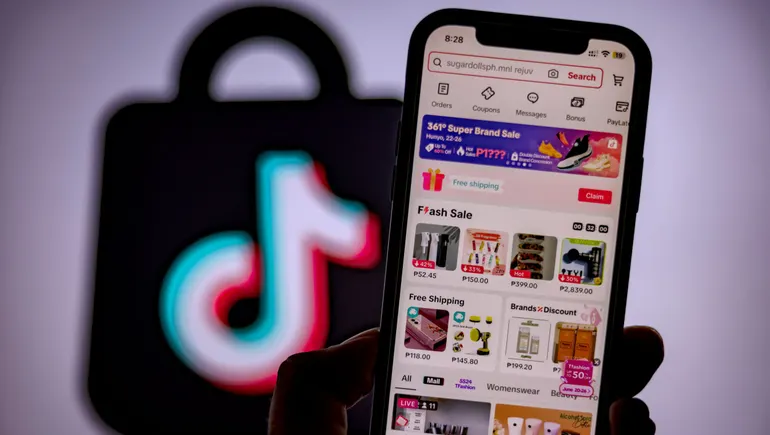
TikTok is pairing an AI shopping assistant with direct checkout, compressing product discovery, advice and purchase into its feed while raising new questions about brand data and customer ownership.
Payments executives say cryptographic audit trails will be essential for proving what consumers authorized, tracing agent behavior and resolving liability when automated purchases go wrong.

OpenAI is expanding ChatGPT shopping with photo-based virtual try-on and a Favorites library, giving the assistant a larger role in product evaluation and consideration.

Constructor and Stripe are bringing product discovery and payment into one AI shopping experience, allowing shoppers and agents to complete purchases without leaving the assistant.

QVC is welcoming shopping agents, Kate Spade permits browsing but not purchases, and Amazon is blocking them—revealing a widening divide over agent access to retail sites.

Shopify plans to let Meta’s Muse agent complete purchases across its merchant network through Shop Pay, extending agentic checkout to a broad base of independent stores.
Shopify expanded WebMCP support to checkout, giving authorized browser agents structured tools to update order details and place purchases for eligible merchants.
IDEMIA’s payment infrastructure combines passkey authentication, restricted-use tokens and consent records so card networks can authorize agent purchases within defined limits.

Anthropic released reference blueprints for shopper- and merchant-facing agents across retail, travel, telecom and ticketing, giving businesses a concrete model for building agent-led transactions.

Reuters reports that John Lewis is increasing content investment to remain visible and useful as more shoppers rely on AI agents to find products.
Mastercard’s chief digital officer explains how Verifiable Intent is designed to prove consumer authorization and establish accountability in AI-initiated payments.

Two U.S. senators asked the FTC to investigate whether Amazon and Walmart AI shopping assistants obscure country-of-origin information and disadvantage American-made products.

Walmart reports that customers using its Sparky AI assistant spend 40% more per order, an early signal that conversational discovery can materially affect basket size.

India is developing rules that could let AI agents make small UPI payments without approval for every transaction, potentially bringing autonomous payments to massive scale.