
What Is the Agentic Commerce Protocol (ACP)? A Guide for Brands, Retailers, and Marketers
The Agentic Commerce Protocol (ACP) is an open standard that defines how AI agents initiate, manage, and complete checkout sessions with merchants programmatically.
Instead of sending users to a web page, ACP lets agents and businesses exchange structured order and payment data via APIs. Launched in late 2025 by OpenAI and Stripe, ACP underpins new experiences such as "buy this in ChatGPT."
ACP focuses on the transaction layer—carts, shipping options, taxes, and order confirmation—rather than discovery or payments themselves. It sits alongside AP2 for payment authorization and MCP for system integration.
What Is the Agentic Commerce Protocol (ACP)?
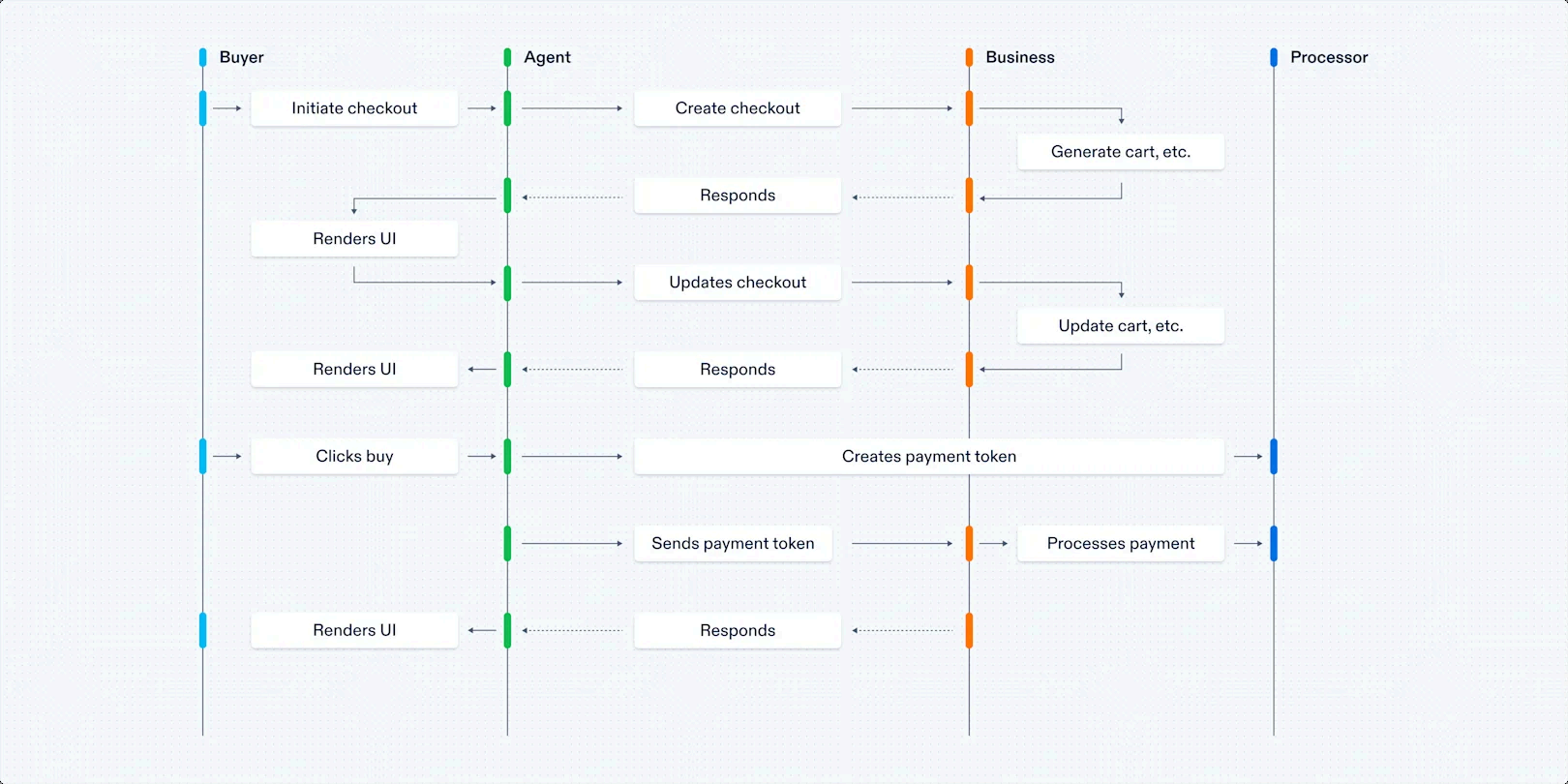
ACP is an open, API-based protocol that standardizes how AI agents and merchants exchange information about products, carts, and checkout steps. Co-developed by OpenAI and Stripe, ACP provides a consistent way to start a checkout session, validate inventory, calculate totals, and confirm orders programmatically.
The protocol emerged because merchants needed a way to participate in agentic commerce without building bespoke integrations for every agent. It gives merchants a clear specification for exposing their catalog and checkout flows while staying in control of pricing, taxes, and compliance.
In Q1 2026, ACP powers OpenAI’s Instant Checkout experiences and is supported by Stripe tooling that helps businesses stand up ACP endpoints more quickly.
How ACP Works (Simple Walkthrough)
Step-by-step example: Buying shoes in a chat
User expresses intent: A user tells an AI assistant, "Buy those blue running shoes from Brand X in size 10."
Agent resolves product: Using product data (from merchant feeds or protocols like Klarna’s), the agent identifies the exact SKU.
ACP session starts: The agent calls the merchant’s ACP endpoint to create a checkout session.
Merchant validates and responds: The merchant verifies inventory, calculates taxes, and responds with a structured cart summary.
User confirms: The assistant presents the final total; the user authorizes the purchase via a secure wallet.
Payment and order execution: The merchant processes payment and creates an order, sending an ACP confirmation back to the agent.
Practical Use Cases for Brands & Retailers
Instant checkout in AI assistants: Merchants expose ACP endpoints so users can complete purchases inside ChatGPT or other agentic surfaces.
Reorder and replenishment flows: Agents can call ACP endpoints to reorder consumables on a schedule or when inventory runs low.
Bundles and configuration: Agents help users configure complex products and push finalized carts into ACP-based checkout.
Unified reporting on agentic sales: Stripe and analytics providers can report specifically on ACP-originated orders.
How to Prepare for Programmatic Checkout
Commerce and engineering teams should review ACP specifications and assess how their existing catalog, cart, tax, and order APIs map to ACP concepts. Some brands will implement ACP directly, while others will rely on platforms that ship ACP support.
Data hygiene is crucial: ACP expects accurate, frequently refreshed product feeds and offer data. Teams should align their pricing and promotion practices so that ACP responses stay in sync with other channels.
Organizationally, brands should treat ACP as a strategic channel with clear KPIs and governance on which products and markets are eligible for agentic checkout.
Frequently Asked Questions
What is the Agentic Commerce Protocol (ACP)?
ACP is an open protocol from OpenAI and Stripe that standardizes how AI agents and merchants exchange data to create and complete checkout sessions.
How does ACP work?
An agent calls a merchant’s ACP endpoint to start a checkout session, receives validated cart data, and confirms the order on the user’s behalf.
Is ACP widely adopted?
ACP is live in OpenAI’s ecosystem and supported by Stripe tooling, with growing interest from merchants exploring agentic commerce.
How does ACP affect e-commerce?
ACP lets consumers complete purchases in conversational interfaces while giving merchants a standards-based way to handle agent-initiated orders.
ACP vs UCP — what’s the difference?
ACP is led by OpenAI and Stripe; UCP is a Google–Shopify standard designed to span multiple surfaces and ecosystems.