
The AI Retail Trends That Matter in 2026: A Practical Guide
The retail AI trends worth acting on in 2026, with a focus on conversational discovery, catalog quality, citation competition, checkout readiness, first-party data, and retail operations.
Retail teams do not need another vague list of AI possibilities. They need to know which trends are already reshaping traffic, merchandising, and checkout, and which ones still belong in the experimental bucket. In 2026, the most useful retail AI trends are the ones connected directly to buying behavior and operational readiness.
The public signals are now strong enough to separate noise from direction. Consumers are using AI tools for product research. Large platforms are embedding shopping into conversational interfaces. Retailers are seeing measurable increases in AI-driven visits. And the same problems that hurt classic ecommerce performance, such as incomplete product data or unclear policies, are becoming even more expensive when a machine sits between the shopper and the site.
This guide focuses on the AI retail trends that matter most for marketers, ecommerce operators, agencies, and product teams, with a bias toward practical implications rather than speculative claims.
Definition
A meaningful retail AI trend is one that already changes how products are discovered, compared, trusted, or purchased, or changes the internal systems retailers rely on to serve those journeys efficiently.
Trend 1: Conversational Discovery Is Becoming a Durable Shopping Behavior
Shoppers are getting comfortable asking for a product by need-state rather than by exact keyword. Instead of typing a product name, they ask for a carry-on bag that fits strict airline rules, a running shoe for wide feet under a set budget, or a sofa that survives pets and fits a narrow stairwell. That shift matters because it rewards merchants that publish enough product context to support nuanced answers.
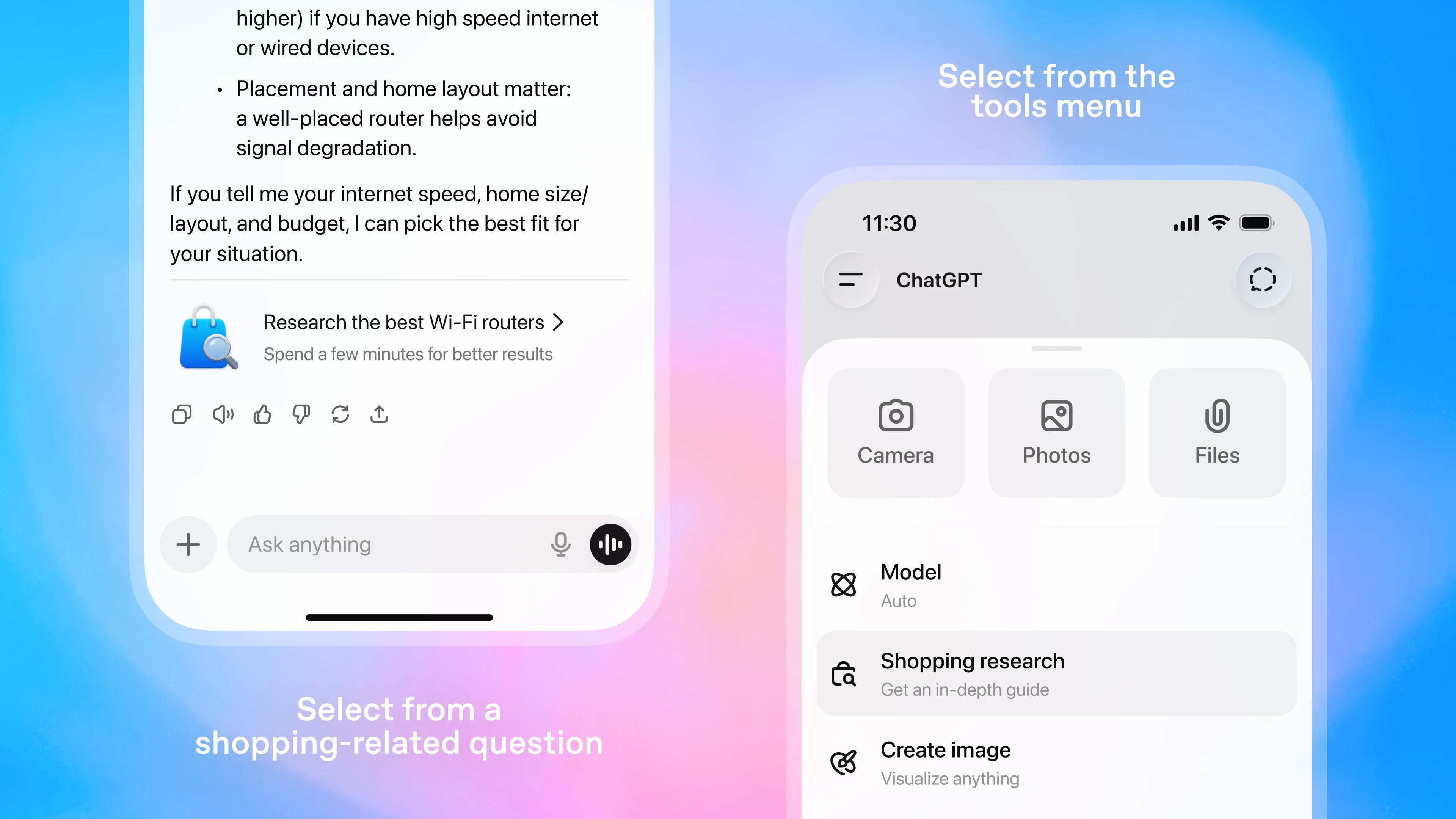
Google's AI shopping updates and OpenAI's shopping research features both reinforce this movement. Discovery begins with intent, not with a category page or a search filter. For marketers and merchandising teams, that means product copy has to answer real buying questions, not just repeat category language.
Trend 2: Catalog Quality Is Moving Closer to Revenue Infrastructure
Retailers used to think of catalog enrichment as a content-management task. That framing is too narrow now. Catalog quality affects search visibility, marketplace quality, merchant feed health, AI retrieval, and conversion once the shopper lands.
The scale of the content problem is still large. Salsify's consumer research found that 54% of shoppers abandoned because product information was inconsistent, 53% because titles or descriptions were unclear, and 48% because review content was missing or weak. Syndigo reported that 66% abandoned because product content was missing or incorrect. Those are not edge-case issues. They are direct evidence that many retail catalogs remain under-specified.
For AI systems, incomplete catalogs are even more damaging because missing detail makes comparison harder. A human can sometimes infer. A recommendation system becomes less confident and may simply prefer a better-described alternative.
Trend 3: Citation Competition Is Becoming a New Layer of Retail Visibility
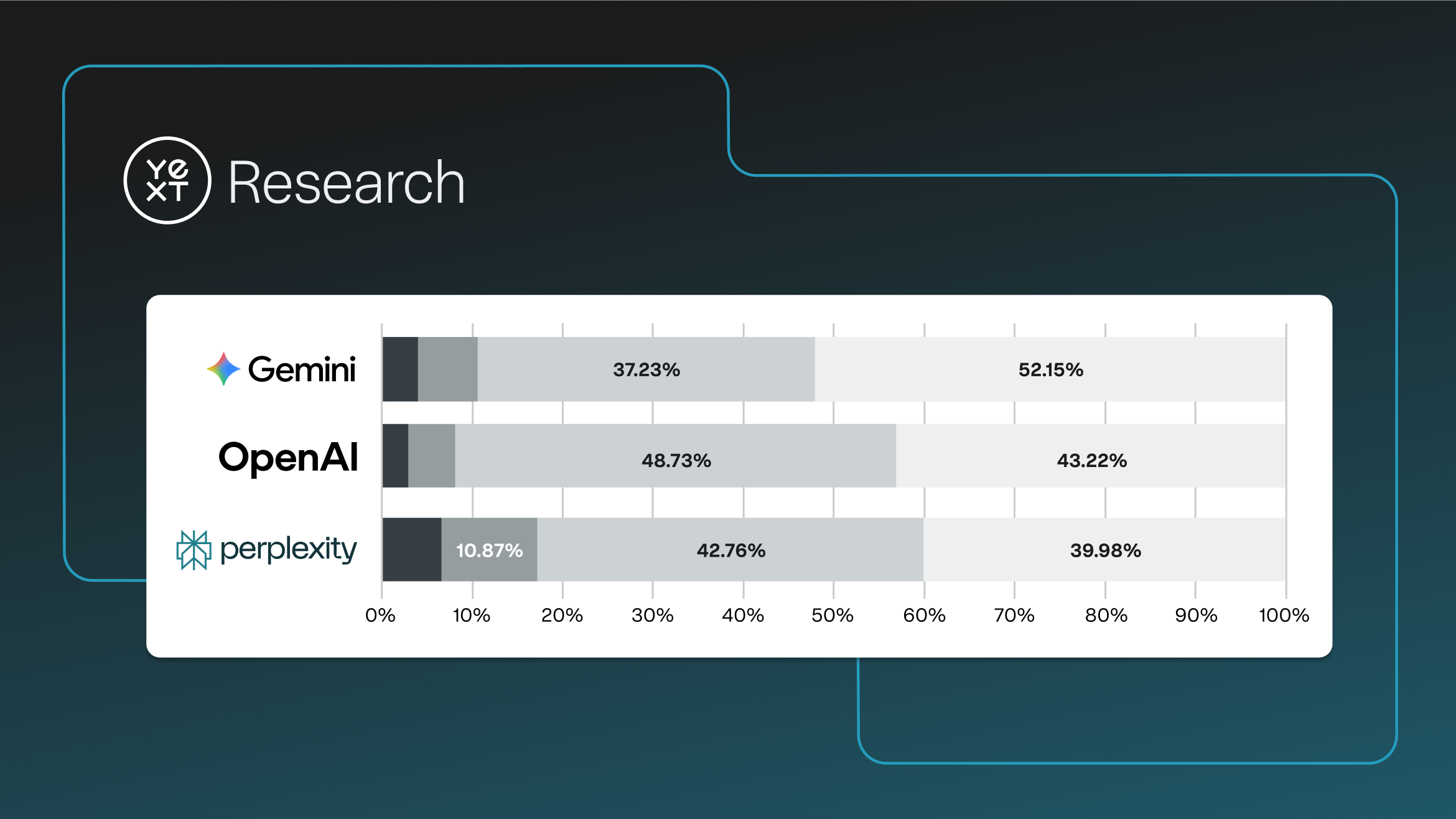
Retail teams often talk about traffic sources, but AI interfaces add a related question: what source types do models rely on when they build an answer? Yext's March 2026 visibility study found meaningful differences across systems. In its observed sample, Gemini leaned more heavily on websites, with official websites making up 52.15% of citations. OpenAI leaned more on third-party sources at 48.73%, while still citing websites 43.22% of the time. Perplexity also relied heavily on third-party material.
That means retailers need two kinds of authority. They need strong owned product content, and they need external validation through reviews, media mentions, credible roundups, and other third-party references. It is not enough to publish great PDPs if every external trust signal is weak. It is also not enough to chase mentions if the owned product record is thin.
For agencies, this is one of the most actionable 2026 shifts. AI visibility is no longer only a site-level technical issue. It is part merchandising, part brand authority, and part citation management.
Trend 4: AI Referral Traffic Is Growing Fast Enough to Change Priorities
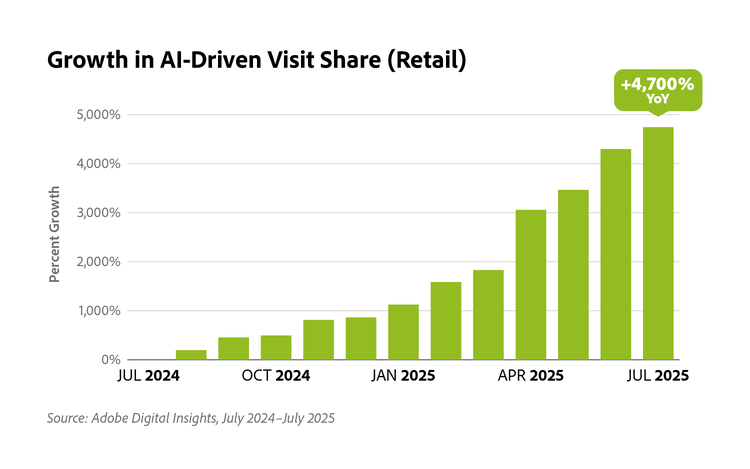
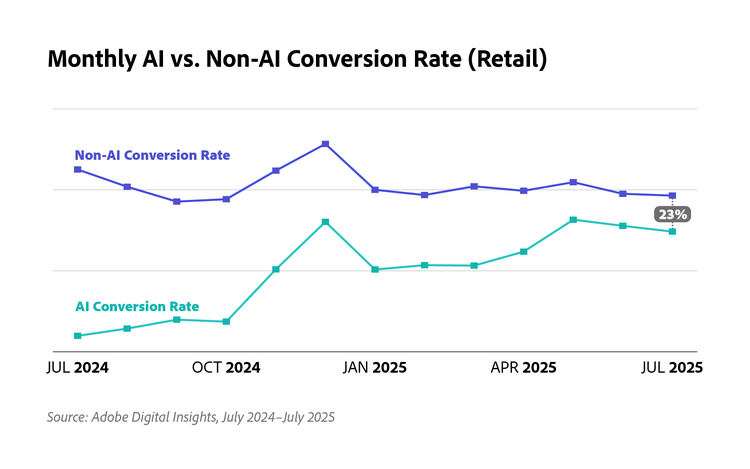
By March 2026, the strongest public benchmarks on AI retail traffic still come from Adobe and Similarweb, and they are now directional enough to justify operational work. Adobe reported that traffic from generative AI sources to U.S. retail sites grew 1,200% between July 2024 and February 2025, and later reported 4,700% year-over-year growth by July 2025. Those are still early-channel numbers, but they are not trivial-channel numbers anymore.
The quality of those visits also matters. Adobe found AI visitors spent 8% longer and viewed 12% more pages than non-AI visitors in early retail benchmarks. Similarweb's 2026 report found ChatGPT referrals to transactional sites converting at 7%, versus 5% for Google referrals, with longer average sessions and more pageviews. Even if these benchmarks are not category-specific for every retailer, they reinforce a useful operational point: AI traffic is not just growing, it can be commercially interesting.
Trend 5: Recommendation Quality and Checkout Quality Are Converging
AI systems shorten the distance between product discovery and purchase intent. When a shopper lands from an answer interface, they often arrive having already seen key tradeoffs, price context, or review proof. That compresses the path from recommendation to checkout, which means poor checkout design wastes even more value than before.
This is why wallet support, guest checkout, shipping transparency, and clean mobile purchase flows now belong in AI-commerce discussions. Recommendation systems can create high-intent visits, but they cannot compensate for a merchant that still hides costs until late in checkout or forces unnecessary account creation.
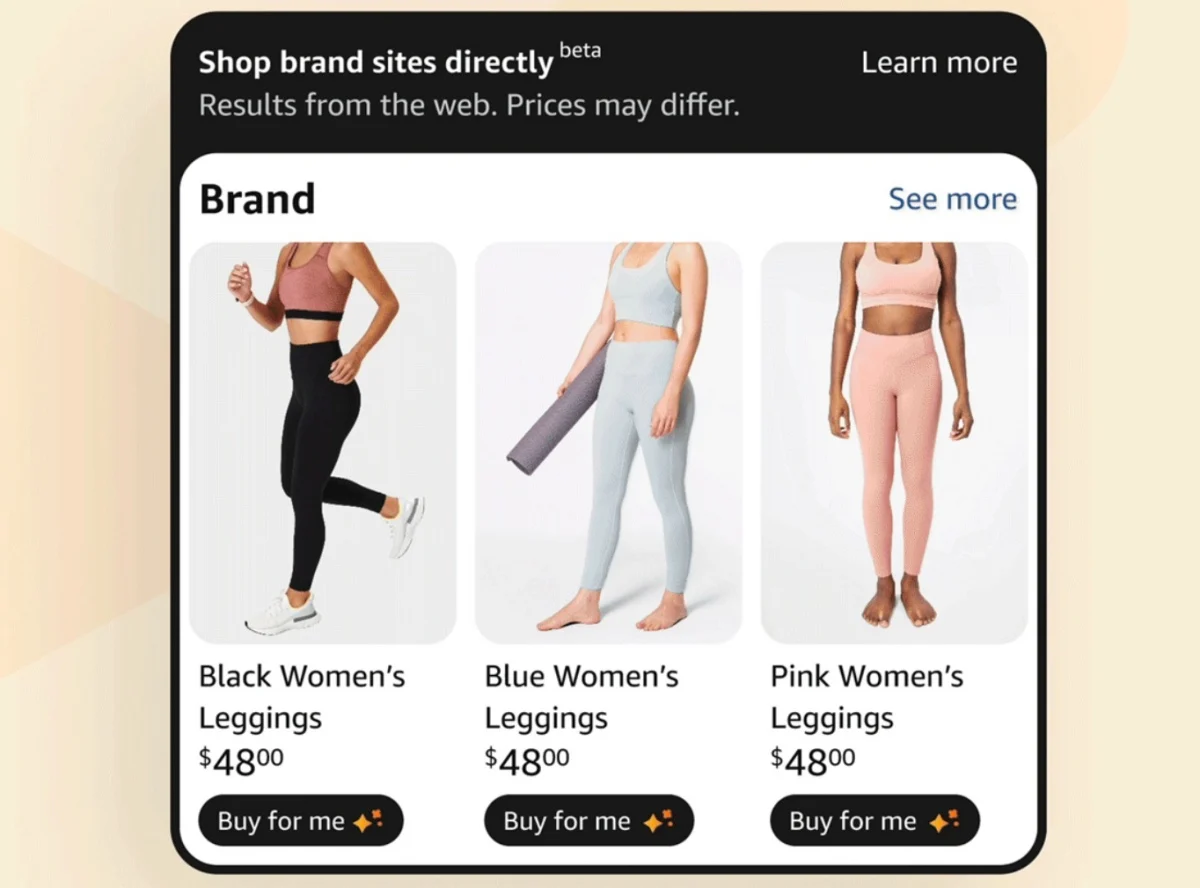
Amazon's Buy for Me experiment is one of the clearest signals here. It reduces the distance between shopper intent and brand-site purchase by helping users complete a brand transaction from an Amazon-led environment. The lesson is bigger than Amazon. More platforms are trying to remove steps between recommendation and completion.
Trend 6: Agent-Assisted Payments and Commerce Rails Are Becoming Real Retail Infrastructure
For years, AI shopping discussions stayed mostly at the discovery layer. That is changing. Payment and commerce infrastructure companies are now treating agentic commerce as a real product category. PayPal's partnership with Perplexity is one example, signaling that conversational commerce is moving closer to transaction execution. Stripe, Google, and others are also building around agentic commerce flows.
Retailers do not need to wire up every emerging protocol immediately. But they should pay attention to what these partnerships imply. The market is moving toward a world where more commerce steps are handled inside assistant-led flows, and merchant systems need to be ready to support that without sacrificing trust or control.

Trend 7: First-Party Data Is Becoming More Valuable, Not Less
One common concern is that AI intermediaries will weaken the direct customer relationship. That risk is real. But it makes first-party data more important, not less important. Retailers that understand replenishment cycles, repeat behavior, product affinities, service issues, and post-purchase satisfaction are in a better position to create strong owned experiences and stronger external signals.
First-party data improves merchandising decisions, email timing, bundling strategy, and on-site personalization. It also helps retailers create the kind of content AI systems need: better FAQs, better use-case language, smarter comparison pages, and more credible answers to common questions.
In other words, first-party data is still one of the strongest defenses against becoming a commodity supplier inside someone else's interface.
Trend 8: Internal AI Workflows Will Quietly Separate Fast Retail Teams from Slow Ones
Not every important retail AI trend is shopper-facing. Teams are using AI internally to speed up product content creation, taxonomy cleanup, review summarization, support triage, campaign drafting, and demand analysis. Adobe's traffic studies get the headlines, but the internal workflow story may matter just as much because it changes how quickly a retailer can improve the systems AI shopping relies on.
A retailer that uses AI to clean titles, identify missing attributes, summarize return reasons, or speed up category-guide production gains a structural advantage. Those internal gains compound. They improve the same content and systems that external AI surfaces later use for discovery.
What These Trends Mean for 2026 Planning
| Trend | Immediate retail action | Primary owner |
|---|---|---|
| Conversational discovery | Rewrite top PDPs and category pages around real shopper questions | Merchandising and SEO |
| Catalog quality as infrastructure | Set required attributes and content standards for top categories | Product operations |
| Citation competition | Improve third-party proof and owned authority together | Brand, PR, and growth |
| AI traffic growth | Create reporting for AI-assisted referral sessions | Analytics and growth |
| Checkout convergence | Reduce friction, improve wallet coverage, and expose shipping costs earlier | Ecommerce product |
| Agentic commerce rails | Track platform partnerships and readiness requirements | Payments and product |
| First-party data value | Use behavioral data to improve category content and lifecycle flows | CRM and merchandising |
| Internal AI workflows | Use AI to accelerate content quality and support insights | Operations |
Strategic Advice for Retail Teams
The useful way to think about AI retail trends is not to ask which interface will win. It is to ask whether your retail system can perform well no matter where discovery begins. Can the catalog be compared? Can the merchant be trusted? Can the offer be quoted accurately? Can the shopper convert without friction? Can the team improve content and policy clarity quickly?
Retailers that answer yes to those questions will be positioned well across search, shopping feeds, AI assistants, marketplaces, and whatever agent-led flows mature next. Retailers that do not will feel every new interface as an external threat because their product truth is still too fragile to travel.
That is why these trends matter in 2026. They are not abstract innovation themes. They are signals that retail performance is becoming more dependent on structured content quality, cross-channel trust, and operational speed.
Frequently Asked Questions
Which retail AI trend deserves the most immediate attention?
For most teams, recommendation-ready catalog quality deserves the most immediate attention because it improves classic ecommerce performance today and also strengthens visibility across search, shopping feeds, and AI assistants.
Is conversational shopping already important enough to budget for?
Yes, but the budget should usually go first toward foundational work such as product enrichment, structured data, feed quality, and checkout clarity. Those fixes support conversational shopping without depending on one platform's roadmap.
How should agencies package this work for clients?
The most useful package is an AI commerce readiness audit covering catalog quality, PDP clarity, merchant trust signals, third-party authority, crawlability, and post-click conversion. That gives clients a roadmap they can apply across teams.
What is the biggest mistake retailers make when reacting to AI trends?
The biggest mistake is chasing visible AI features while leaving the catalog, offer data, and checkout system messy. Weak product truth limits performance across nearly every emerging retail surface.
Will AI reduce the importance of first-party data?
No. First-party data becomes more valuable because it helps retailers improve owned-channel personalization, strengthen content quality, and create more credible recommendation inputs across external AI systems.