
Why Agentic Commerce Needs a Neutral Infrastructure Layer
As AI shopping surfaces multiply, brands do not want to rebuild their commerce stack for every assistant, platform, or protocol. The next battleground is the infrastructure layer that keeps participation portable.
Channel fragmentation is back, only this time it is arriving through AI shopping surfaces instead of mobile apps or social storefronts. Every new assistant wants to become a commerce gateway. Every gateway wants merchants to adapt their data, checkout, identity, and policy layer to fit its interface.
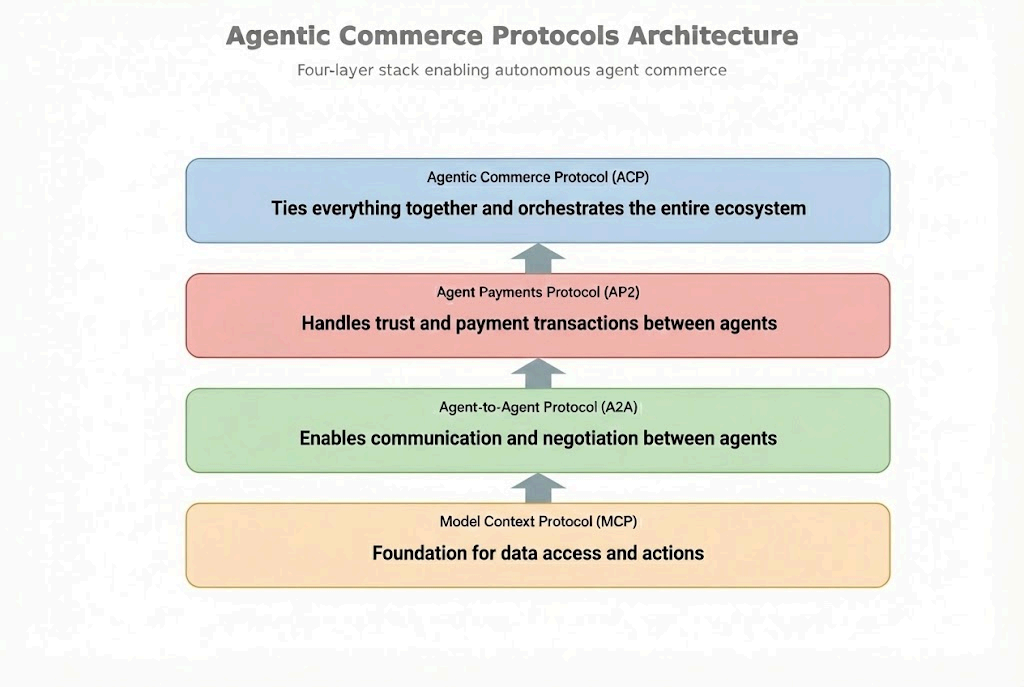
That is why a neutral infrastructure layer matters. Brands need a way to participate in agentic commerce without rebuilding for every assistant or surrendering too much leverage to the platform that owns the shopper interaction.
Why this matters now
Merchants already know the cost of adapting to fragmented channels. They have lived through marketplace feed requirements, paid-media dependence, app-store rules, and social commerce experiments. AI shopping threatens to recreate the same pattern at a deeper level because the integration point is no longer just merchandising. It is discovery, product data, checkout logic, identity, payment rules, and post-purchase support.
Core idea
The winners in agentic commerce will not just expose APIs. They will create a portability layer that lets merchants publish once, interoperate across assistants, and keep control over product data, checkout rules, and customer relationships.
Protocols versus proprietary rails
Proprietary commerce rails can move fast, but they often concentrate power at the interface owner. Open protocols and shared abstractions move more slowly at first, but they lower long-term switching costs. That is why standards such as UCP matter strategically even before they matter commercially at scale.
The real difference is not technical elegance. It is bargaining power. A protocol-compatible merchant is harder to trap.
What brands should demand from the stack
- Portable product and offer models that are not locked to one assistant's schema.
- Checkout abstraction so payment, authorization, and policy logic can travel across surfaces.
- Machine-readable policy endpoints for returns, shipping, subscriptions, and service rules.
- Observability so merchants can see which agents request data, which products are surfaced, and where failures occur.
Composable commerce becomes more valuable, not less
Composable commerce was sometimes dismissed as a technical preference. In an agentic world it becomes strategic insurance. The ability to swap services, expose clean APIs, and keep business logic outside a single frontend reduces the cost of participating in new AI channels.
The same principle applies to content and catalog infrastructure. A merchant that owns a clear product knowledge layer can publish to multiple assistants far more easily than one whose catalog logic is trapped inside brittle templates or platform-specific hacks.
The neutral layer is about leverage
Brands should not confuse "being available in AI shopping" with "being strategically well-positioned." Participation without portability can still create dependency. The long game is to make agentic commerce possible without allowing one surface to become the sole owner of demand, data, and checkout context.
That is why neutral infrastructure is not a back-office issue. It is a control issue. The merchants that think clearly about it now will have more options when agentic commerce becomes a meaningful share of demand.
Frequently Asked Questions
What is a neutral infrastructure layer in agentic commerce?
It is an abstraction layer that lets merchants participate in multiple AI shopping surfaces — ChatGPT, Google AI Mode, Perplexity, and others — without rebuilding their commerce stack for each platform or becoming locked into a single gatekeeper.
Why can't merchants just integrate with each AI shopping platform individually?
They can, but the cost compounds. Each platform has its own data requirements, checkout expectations, and policy formats. Without an abstraction layer, merchants face the same channel fragmentation problem they experienced with social commerce and marketplace feeds — multiplied across every new AI assistant.
How do open protocols like UCP help?
Open protocols reduce switching costs by standardizing how product data, checkout rules, and merchant policies are exposed to AI agents. A protocol-compatible merchant can interoperate across multiple assistants without custom integrations for each one.
Is composable commerce the same thing as a neutral infrastructure layer?
Not exactly, but composable commerce is a strong foundation. Composable architecture — modular services connected by APIs — makes it easier to build the abstraction layer. But the neutral layer also includes standards for data portability, policy exposure, and agent observability that go beyond technical modularity.
What happens to merchants who do not invest in portability?
They risk becoming dependent on whichever AI shopping surface grows fastest. That creates the same leverage imbalance many brands experienced with Amazon marketplace dependency — strong near-term distribution at the cost of long-term strategic control.
What should a brand prioritize first?
Start with machine-readable product data and policy endpoints. These are the minimum requirements for any AI agent to understand and recommend your products. Then evaluate checkout abstraction and protocol compatibility as the landscape matures.