
How to Get Agentic AI to Recommend Your Ecommerce Site
A practical 2026 guide to making your ecommerce site easier for agentic AI systems to understand, compare, and recommend.
Product discovery is shifting into AI interfaces quickly enough that ecommerce teams can no longer treat it as an edge case. A shopper can ask ChatGPT for a carry-on bag that fits strict airline rules, use Google AI shopping experiences to compare options by material and price, or move from an answer directly into a merchant checkout flow. The recommendation layer now decides which merchants get seen first.
That changes the job of the website. Your site still has to persuade people, but it also has to teach machines what your products are, why they fit a need, and whether a shopper can buy with confidence. Merchants that do that well become easier to retrieve, easier to compare, and easier to recommend.
This guide focuses on the practical work behind that shift: improving product data, trust signals, crawlability, and transaction readiness so agentic AI systems can describe your catalog accurately and send higher-quality traffic.
Definition
Agentic AI recommendation readiness is the degree to which a merchant exposes clear product identity, decision-support content, trust signals, and low-friction transaction paths that AI systems can understand and present confidently.

Why This Matters in March 2026
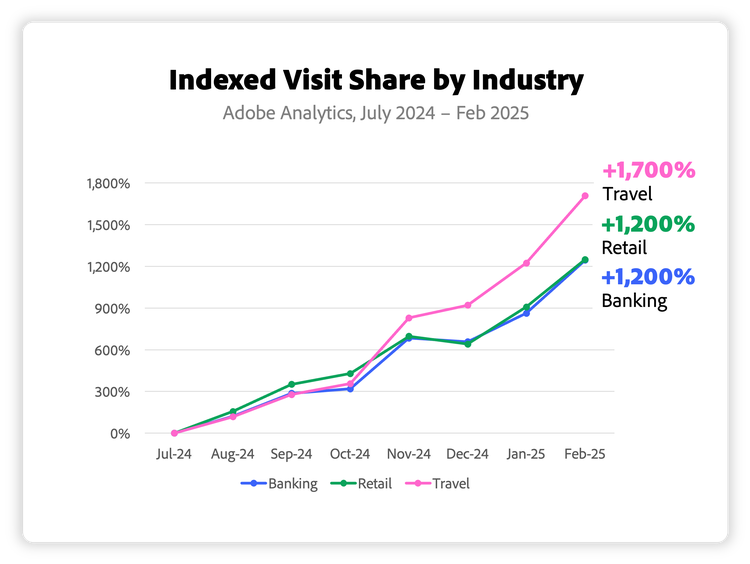
The public data now points in one direction: AI is still a smaller traffic source than classic search, but it is growing fast and behaving differently. Adobe reported that traffic from generative AI sources to U.S. retail sites was up 1,200% between July 2024 and February 2025, and later reported 4,700% year-over-year growth by July 2025. Similarweb's late-2025 and early-2026 research adds a second signal: when AI users do click through, those visits are often higher intent than standard search traffic.
That means recommendation visibility is no longer just a future-state concern. It is already affecting how product discovery happens, especially in high-consideration categories where shoppers ask comparative questions before they click.
What the traffic benchmarks show
| Benchmark | What it says | Why it matters |
|---|---|---|
| Adobe, Mar. 2025 | AI-driven retail traffic up 1,200% from Jul. 2024 to Feb. 2025 | Referral volume is still early, but growth is not theoretical anymore. |
| Adobe, Mar. 2025 | AI visitors browsed 12% more pages per visit and spent 8% longer on retail sites | Traffic from AI often arrives in research mode, with stronger mid-funnel behavior. |
| Adobe, Mar. 2025 | AI traffic converted 9% less often than non-AI retail traffic in Feb. 2025 | Early AI traffic still needed cleaner handoffs and better post-click experiences. |
| Adobe, Aug. 2025 | AI-driven retail traffic up 4,700% year over year by Jul. 2025 | Growth accelerated rather than flattening during 2025. |
| Similarweb, 2026 Gen AI report | ChatGPT referrals to transactional sites convert at 7% versus 5% for Google referrals | When AI users click through, many arrive with stronger purchase intent. |
| Similarweb, 2026 Gen AI report | ChatGPT referrals average 15 minutes on site and 12 pageviews versus 8 minutes and 9 pageviews from Google referrals | The quality of AI referral traffic can be materially stronger than standard search. |
Where AI Visibility Is Coming From
The next question is where this visibility is originating. There are two useful lenses. The first is platform demand: which AI products people use most. The second is citation behavior: which source types those AI systems tend to rely on when constructing answers.
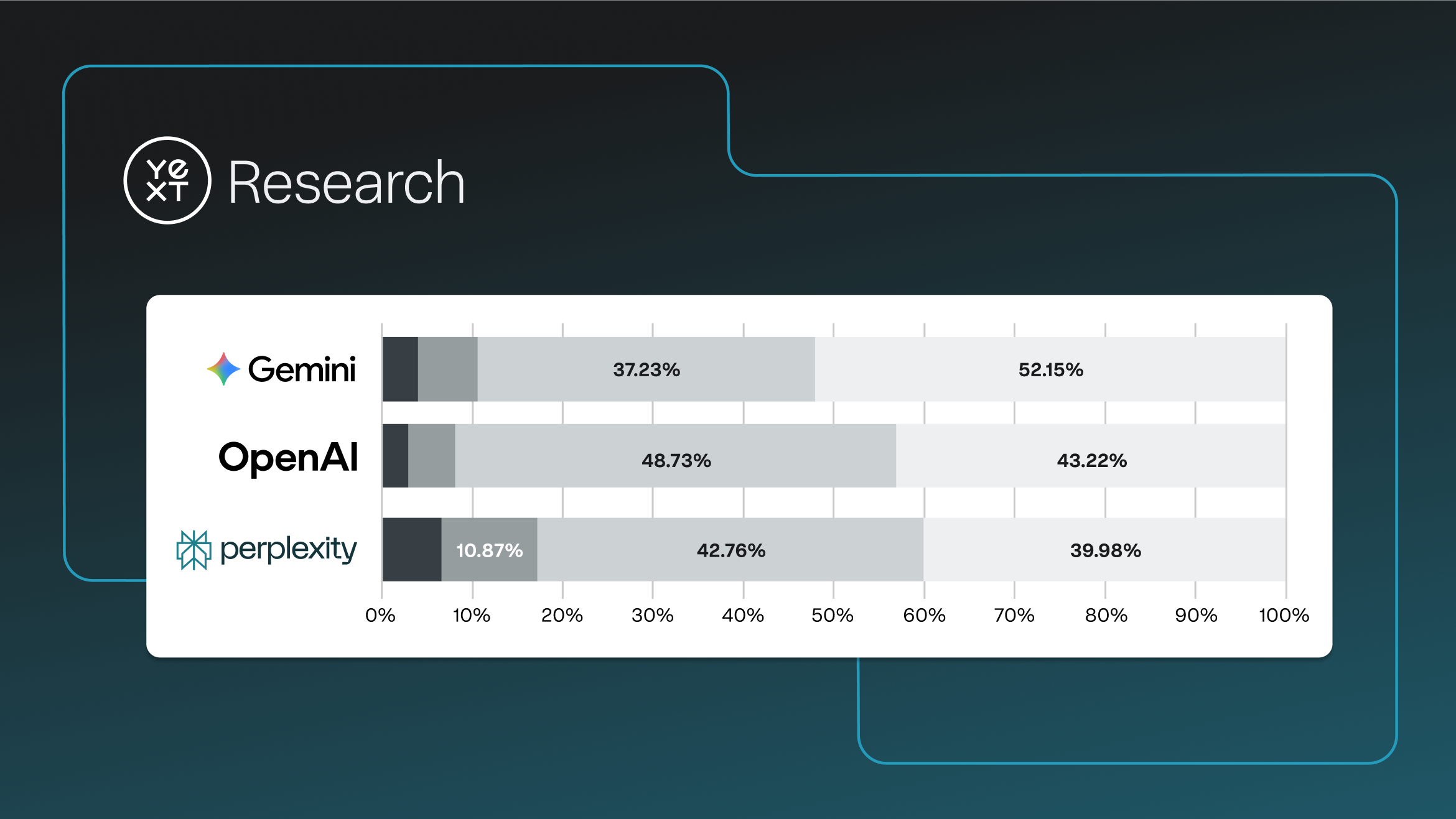
Similarweb's 2026 generative AI benchmark says ChatGPT still commands roughly 79% of global Gen AI web traffic, with Gemini at about 13% to 14% and Perplexity at about 6.4%. That alone tells operators where most consumer AI shopping attention currently sits. But Yext's March 2026 research on AI visibility adds something more actionable: not every model cites the same source mix.
| Platform signal | Latest public benchmark | Practical implication |
|---|---|---|
| ChatGPT demand share | About 79% of global Gen AI web traffic | For most brands, OpenAI surfaces are still the first place to test AI visibility improvements. |
| Gemini demand share | About 13% to 14% of global Gen AI web traffic | Google matters because usage is rising and its shopping stack is already merchant-connected. |
| Perplexity demand share | About 6.4% of global Gen AI web traffic | Smaller scale, but often strong for research-heavy and citation-heavy journeys. |
| Gemini source mix | Yext found official websites made up 52.15% of observed citations in its March 2026 study | High-quality owned content has a strong chance of shaping Gemini answers. |
| OpenAI source mix | Yext found third-party sources led at 48.73%, with websites at 43.22% | Brand-controlled pages matter, but reviews, media, and external validation still shape visibility heavily. |
| Perplexity source mix | Yext found third-party sources at 42.76% and websites at 39.98% | Earned presence and strong external proof remain important in citation-first interfaces. |
What Agentic AI Looks For Before It Recommends a Merchant
Recommendation systems need four things before they can present a product with confidence: clear product identity, enough context to explain fit, enough evidence to trust the merchant, and a plausible path to purchase.
- Identity: descriptive product titles, strong category labels, normalized variants, and identifiers such as GTIN or MPN where relevant.
- Decision support: materials, dimensions, compatibility, sizing, use-case language, ingredient or formulation information, and plain-language tradeoffs.
- Trust: ratings, review volume, returns, delivery windows, warranty information, and consistent seller details.
- Actionability: current price and stock status, product URLs that resolve cleanly, and a checkout experience that does not reintroduce unnecessary friction.
When one of those layers is missing, the AI system has to infer. That usually means weaker recommendation confidence, fewer citations, or exclusion from shortlist-style answers.
How to Improve Recommendation Readiness
1. Rewrite top PDPs for extraction, not just persuasion
Vague titles and soft marketing language make humans work harder and give machines less to use. Lead with what the product is, who it is for, and what constraints it solves. Then add short sections answering comparison questions such as size, material, compatibility, or care.
2. Publish evidence instead of slogans
Replace abstract claims like premium, elevated, or exceptional with specifics the model can reuse. If you sell cookware, say induction-compatible, oven-safe to 500F, and dishwasher safe. If you sell skincare, say fragrance-free, barrier-supporting, and suited for sensitive skin.
3. Keep your offer state consistent everywhere
Google Search Central and Merchant Center guidance are clear on the value of accurate product markup and feeds. If the page price, schema, and merchant feed disagree, trust drops immediately. That inconsistency hurts both search and AI visibility.
4. Do not hide policy information
AI shopping interfaces frequently answer practical questions, not just product questions. Return windows, delivery speed, free-shipping thresholds, and warranty terms help systems decide whether a merchant is recommendation-safe.
5. Make the post-click experience worthy of high-intent traffic
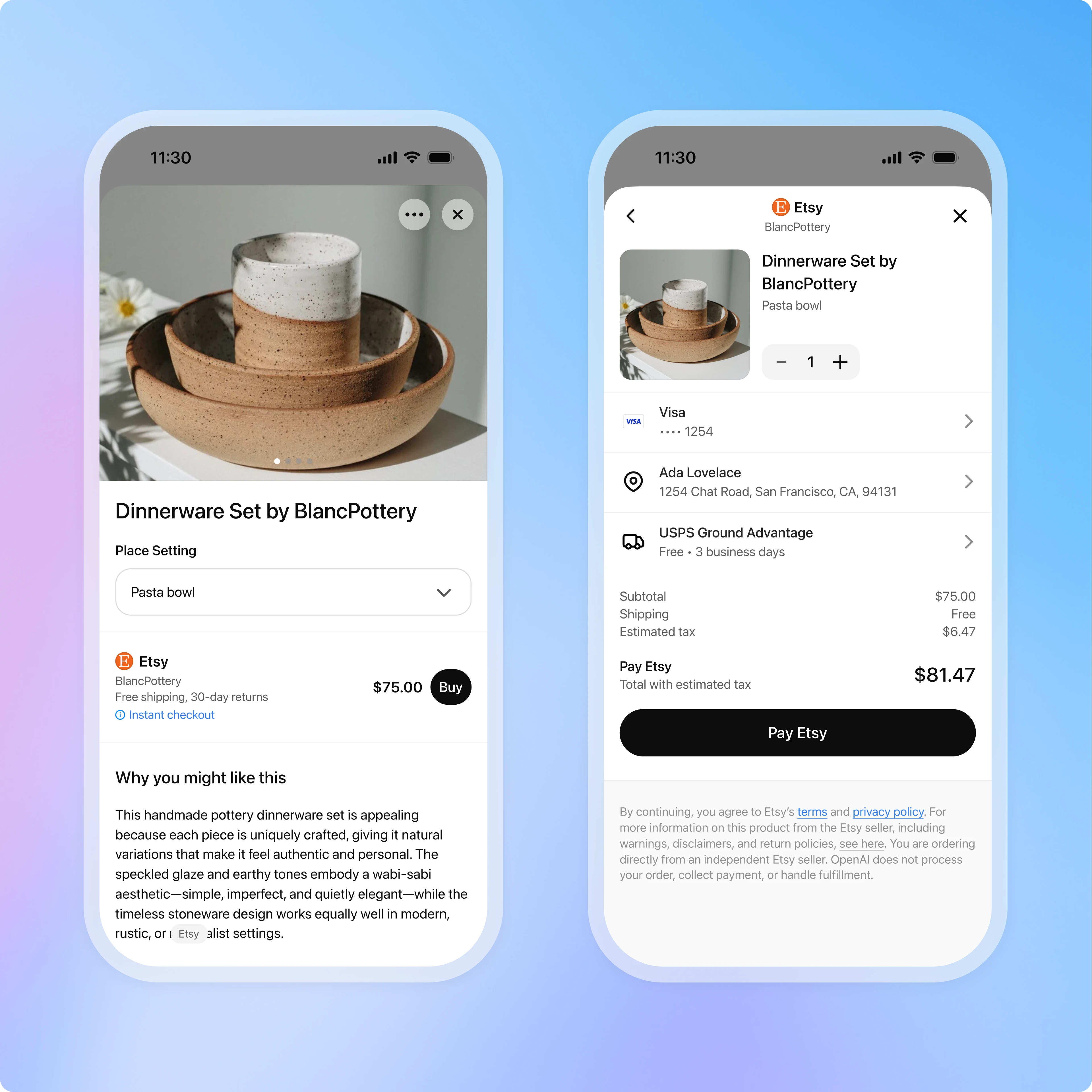
Recommendation traffic compresses intent. If a user clicks through from an AI answer and immediately hits forced account creation, hidden shipping costs, or a slow mobile cart flow, the recommendation value is wasted.
Strategic Advice
If you want a practical starting point, audit twenty revenue-driving products as if an AI assistant had to recommend them tomorrow. Could it identify the exact item, explain who it fits, cite current proof, and send the shopper to a reliable transaction path? If the answer is no, fix the page before you spend more money driving awareness to it.
That is the clearest shift in 2026. Recommendation readiness is becoming part of channel readiness. Merchants that make their catalogs easier to interpret will be in a stronger position whether discovery starts in ChatGPT, Google, Perplexity, retailer agents, or the next shopping interface that emerges.
Frequently Asked Questions
How do I know whether my store can be discovered by AI shopping systems?
Start with three checks: confirm your important product pages are crawlable, confirm your structured product markup validates, and confirm your feed or Merchant Center data matches what appears on the page. If pricing, availability, or canonical signals are inconsistent, recommendation visibility will suffer.
Do I need a custom API to be recommended by AI systems?
Not always. Many AI shopping experiences still rely heavily on crawlable product pages, merchant feeds, and structured data. APIs become more important when you want deeper shopping-agent integrations, live inventory queries, or agent-assisted cart and checkout workflows.
Which platforms matter most right now?
The current public benchmarks suggest ChatGPT still has the largest share of consumer generative-AI demand, while Gemini is especially important because it sits close to Google's merchant and shopping stack. Most teams should optimize for both, while also monitoring Perplexity and retailer-specific agent surfaces.
What content matters most for recommendation quality?
Descriptive titles, rich attributes, concise use-case copy, verified reviews, visible policy details, and accurate price and inventory information matter most. These are the fields that help AI systems compare options and explain why a product fits a shopper's request.