
Google's AI Shopping and Ads Roadmap: What Agentic Commerce Means for Brands in 2026
Google is rebuilding shopping and advertising around AI-powered, agent-driven experiences. Here is what the new ad formats, Universal Commerce Protocol, and AI Mode mean for brands and retailers in 2026.
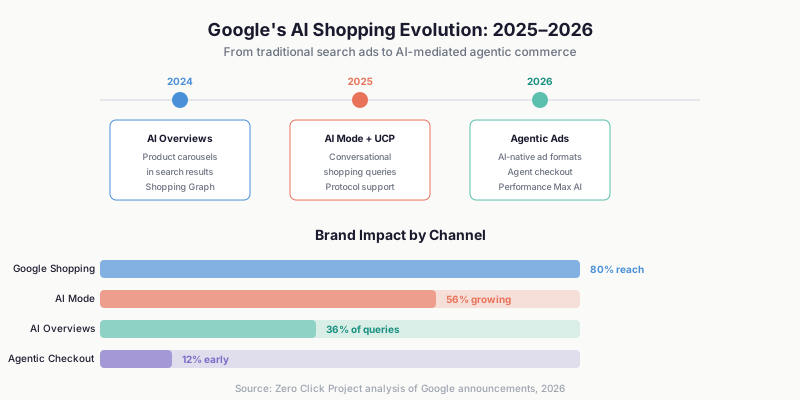
Google is rebuilding its shopping and advertising infrastructure around AI-driven, agent-powered experiences. In early 2026, Vidhya Srinivasan, Google's VP and GM of Ads and Commerce, outlined how Search, YouTube, and the broader shopping ecosystem are being restructured for what Google calls the agentic era — where AI does not just surface information but actively assists, recommends, and completes transactions.
For ecommerce brands, agencies, and marketers, these changes are not speculative. They are shipping now, and they will reshape how products are discovered, advertised, and purchased through Google's ecosystem in 2026 and beyond.
What Is Agentic Commerce in Google's Context?
Agentic commerce refers to AI systems that go beyond surfacing search results — they actively guide shoppers through the purchase journey, recommend specific products, and enable checkout directly within AI-powered interfaces like Google's AI Mode.
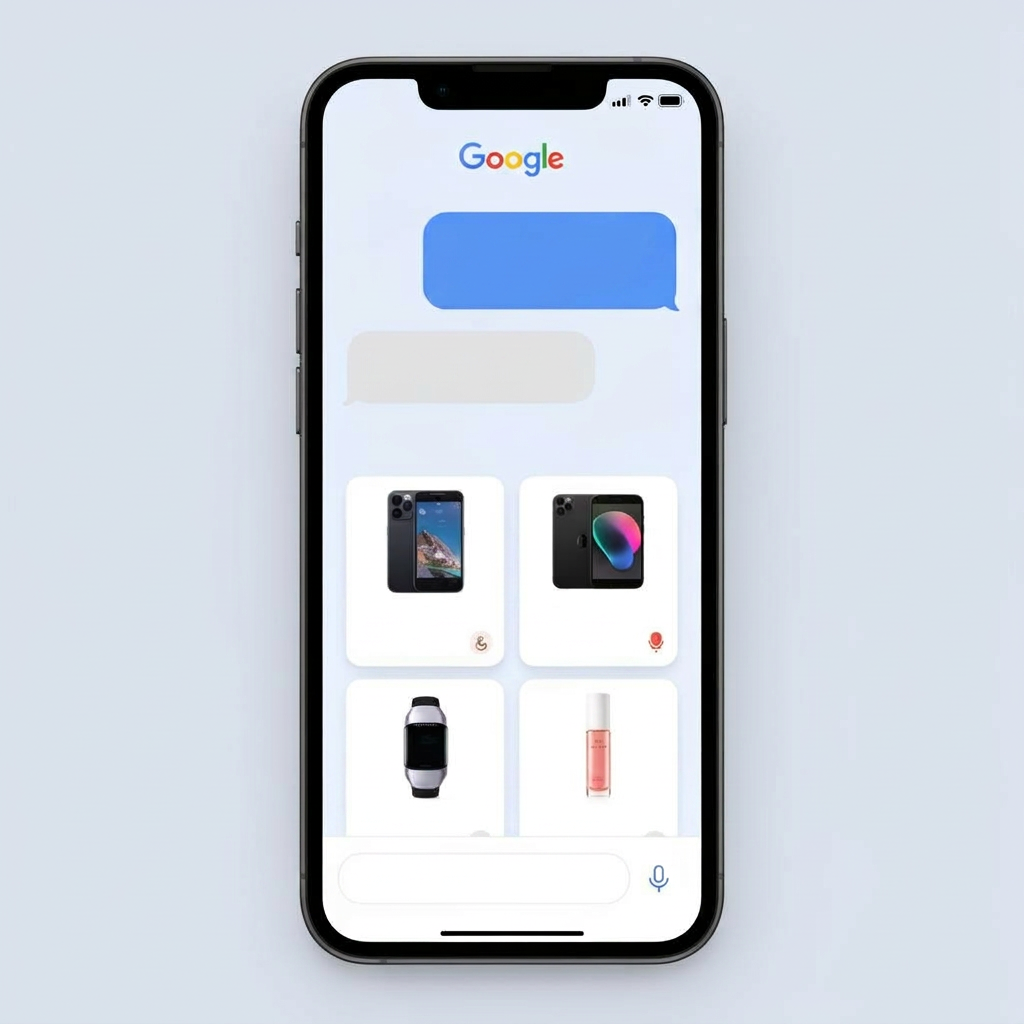
How Google AI Mode transforms the shopping query flow: from conversational intent to product recommendation to in-search checkout.
AI Mode and the New Shopping Ad Formats
Google's AI Mode is transforming how commercial queries are handled. Instead of the traditional ten blue links, AI Mode presents conversational, contextual responses that integrate product recommendations directly into the answer experience. New shopping ad formats are being embedded within these conversational flows.
Two new formats stand out:
- Sponsored retail listings in AI Mode: Product ads that appear naturally within conversational search results, positioned as relevant recommendations rather than traditional display placements. These listings include product images, prices, ratings, and direct purchase links — all surfaced within the AI conversation.
- Direct Offers: A format that enables users to find products and complete checkout without leaving Google Search, collapsing the discovery-to-purchase funnel into a single interface. Direct Offers show real-time pricing, inventory, and shipping estimates inline.
For brands, this means product visibility in Google Search is increasingly tied to AI Mode compatibility. Products that are well-structured for AI retrieval — with clean data, strong reviews, and competitive pricing — will appear more frequently in these new placements.
How AI Mode Differs from AI Overviews
| Feature | AI Overviews (2024–2025) | AI Mode (2026) |
|---|---|---|
| Interaction model | Static summary above search results | Conversational, multi-turn dialogue |
| Shopping integration | Occasional product mentions | Full product carousels, pricing, checkout |
| Ad formats | Limited placement | Sponsored retail listings, Direct Offers |
| Transaction capability | Redirect to retailer site | UCP-powered in-search checkout |
| Data requirements | Basic product feed | Rich structured data, schema, merchant center compliance |
Universal Commerce Protocol (UCP): Standardizing AI-Driven Checkout
Google is standardizing AI-driven shopping through the Universal Commerce Protocol (UCP). UCP enables consumers to browse, pay, and complete purchases seamlessly within AI Mode and other Google surfaces. Early rollouts include integrations with Etsy and Wayfair, with Shopify, Target, and Walmart announced as upcoming partners.
For retailers, UCP participation means products can be transacted directly within Google's interface. The upside is reduced friction for high-intent shoppers. The trade-off is increased platform control over the checkout experience and potentially less direct customer data flowing back to the merchant.
UCP Technical Requirements
To participate in UCP-powered checkout, retailers need to meet specific technical requirements:
- Google Merchant Center Next: All products must be active in Merchant Center with complete product data — including GTIN, pricing, real-time availability, and shipping information.
- Checkout API integration: UCP requires a server-side API that can process orders, validate inventory in real-time, and return order confirmation to Google's interface.
- Return policy data: Machine-readable return policies that Google can display to shoppers during the in-search checkout flow.
- Payment processing: Google handles payment collection through its own infrastructure; merchants receive settlement through existing Merchant Center payment rails.
| UCP Feature | Impact for Brands |
|---|---|
| In-Search checkout | Lower friction, higher conversion for commercial queries |
| Platform-mediated payments | Simplified transaction, but less merchant control over checkout experience |
| Retailer integrations (Etsy, Wayfair, Shopify) | Broader distribution, but potential commoditization within Google's interface |
| Standardized product data requirements | Clean, structured product feeds become mandatory, not optional |
Optimizing Product Feeds for AI Mode
AI Mode surfaces products differently than traditional Google Shopping. Instead of keyword matching, it uses semantic understanding to match products to conversational queries. This shifts the optimization strategy for product feeds.
Product Feed Optimization Checklist for AI Mode
| Feed Element | Traditional Shopping Optimization | AI Mode Optimization |
|---|---|---|
| Product title | Keyword-stuffed (brand + category + color + size) | Natural language with key differentiators ("Lightweight noise-cancelling headphones with 40-hour battery") |
| Description | SEO-optimized keyword density | Conversational, answering "why buy this" with use-case context and comparison language |
| Product attributes | Required fields only | Exhaustive: every spec, compatibility detail, and use-case attribute |
| Images | White-background hero image | Multiple angles + lifestyle images showing product in context |
| Custom labels | Campaign-based segmentation | Use-case labels: "gift-under-50", "work-from-home", "travel-essential" |
YouTube as a Commerce Channel
YouTube continues to evolve from a content platform into a commerce channel. Google is using AI to match brands with relevant creators, turning creator influence into measurable business impact. Product links embedded in creator content are now more directly tied to purchase attribution.
This matters for brands investing in influencer marketing. The connection between creator content and product sales is becoming more trackable, making YouTube a performance channel rather than purely a brand awareness play.
YouTube Commerce Integration Points
- Shoppable video ads: Product cards overlaid on video content with direct purchase links tied to Google Merchant Center.
- Creator partnership matching: AI-powered creator matching based on audience overlap, engagement patterns, and conversion propensity — not just follower count.
- Full-funnel attribution: View-through and click-through attribution connecting creator content to purchase events, enabling ROAS measurement for creator campaigns.
AI-Powered Creative Production
Google's Gemini model now powers ad tools that automate creative production and campaign optimization. Tools like Veo (for video) enable advertisers to create studio-quality assets in minutes rather than weeks. AI Max expands campaign reach by automatically adapting creatives across formats and placements.
For smaller brands and agencies, this lowers the barrier to high-quality ad creative. For larger brands, it accelerates testing velocity and enables more personalized ad variants across audience segments.
What This Means for Ecommerce Brands
Google's moves signal a broader industry shift. Buying decisions are increasingly happening inside AI-driven search, creator content, and agent-powered checkout flows. These changes create new ways to reach high-intent shoppers, but they also signal growing platform control over discovery, measurement, and transactions.
The practical implications:
- Product feed quality is now a competitive advantage. AI Mode surfaces products based on structured data quality, not just bid strategy. Brands with richer, more accurate product data will get more impressions.
- Checkout integration with UCP may become table stakes. Brands not participating in platform-native checkout risk losing high-intent shoppers to competitors who are.
- Creator commerce is measurable. YouTube's improved attribution makes influencer spend more justifiable to CFOs.
- AI creative tools level the playing field. Quality ad creative is no longer gated by production budgets.
- Platform dependency is increasing. As Google controls more of the funnel, brands need to balance participation with owned-channel investment.
Action Plan: Preparing for Google's AI Shopping Era
- Audit your Merchant Center data. Ensure every product has complete attributes, GTIN, competitive pricing, and accurate availability. Products with missing data will not surface in AI Mode.
- Rewrite product descriptions for conversation. Shift from keyword-optimized to natural language that answers "why should I buy this" in the context a shopper would ask.
- Evaluate UCP readiness. If you are on Shopify, Etsy, or another supported platform, explore early integration. If not, monitor the partner list and prepare your checkout API.
- Test AI Mode visibility. Search for your product categories in Google AI Mode and note whether your products appear. If not, diagnose feed quality issues.
- Build a YouTube commerce strategy. Identify creators whose audiences overlap with your customers. Use Google's new matching tools rather than manual outreach.
Frequently Asked Questions
What is Google AI Mode for shopping?
AI Mode is Google's conversational search interface that integrates product recommendations, sponsored listings, and checkout capabilities directly into search results, replacing the traditional list-based shopping experience. It uses Gemini to interpret shopping intent and match products semantically.
What is the Universal Commerce Protocol (UCP)?
UCP is Google's open standard that enables consumers to browse, compare, and complete purchases seamlessly within AI-powered interfaces. It standardizes how product data, pricing, and checkout work across Google's ecosystem. Early partners include Etsy, Wayfair, and Shopify.
Should brands participate in Google's in-Search checkout?
For most brands selling through Google Shopping, yes. The reduced friction increases conversion rates for high-intent queries. However, brands should monitor the impact on customer data collection, direct relationship building, and margin implications of platform-mediated transactions.
How does this affect Google Shopping SEO?
Product feed quality, structured data, and review signals become more important in AI Mode than traditional keyword-based optimization. Brands should prioritize natural-language product titles, exhaustive product attributes, competitive pricing transparency, and strong review signals.
How do I optimize product titles for AI Mode vs. traditional Shopping?
Traditional Shopping rewards keyword-packed titles like "Sony WH-1000XM6 Wireless Noise Cancelling Over-Ear Headphones Black." AI Mode rewards natural-language titles that communicate value: "Sony WH-1000XM6 — premium noise-cancelling headphones with 30-hour battery and multipoint Bluetooth." Focus on what makes the product worth recommending, not keyword density.