
Optimizing Electronics and Smart Home Product Data for AI Discovery
Electronics are the easiest category for AI to compare on specs — and the hardest to differentiate. This guide covers compatibility data, Matter protocol structuring, contextual specifications, wearable subscription transparency, and strategies to avoid spec-sheet commoditization.
Electronics and smart home products have the most quantifiable product attributes of any ecommerce vertical — and that makes them simultaneously the easiest category for AI to compare and the hardest for brands to differentiate in. When every product can be reduced to specs, features, and benchmarks, AI shopping assistants default to price-performance comparisons that commoditize even premium brands.
Winning in AI-mediated electronics discovery requires a fundamentally different approach: structured compatibility data, ecosystem context, and use-case framing that helps AI systems recommend products based on how they fit into a customer's existing setup — not just how they compare on a spec sheet.
The Compatibility Problem
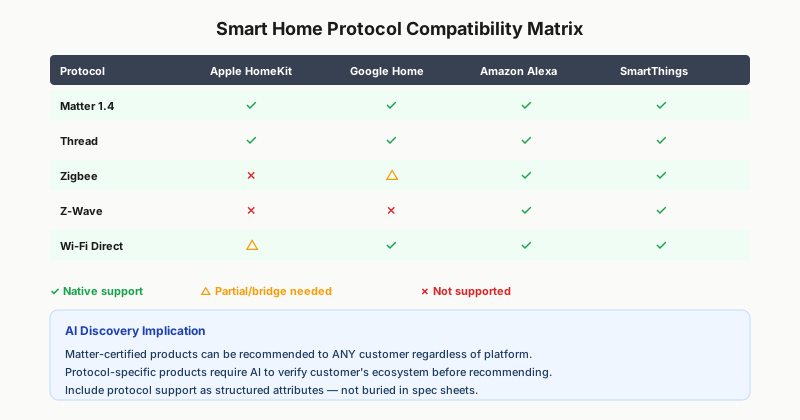
Smart home is now the category where compatibility data matters most. With Matter, Thread, Zigbee, Z-Wave, Wi-Fi, and Bluetooth all coexisting, a customer asking "will this work with my setup" needs an AI system that understands protocol compatibility, hub requirements, and ecosystem constraints. Most brands provide none of this as structured data.
How AI Systems Evaluate Electronics
When a customer asks "what's the best smart speaker for a small apartment with an Apple HomeKit setup," an AI system must evaluate acoustic performance for small spaces, HomeKit compatibility, voice assistant ecosystem, size constraints, and price. The most effective electronics AI uses specialized evaluation layers:
| Evaluation Layer | Function | Data Required From Brand |
|---|---|---|
| Compatibility Check | Verifies device works with customer's existing ecosystem | Platform support (HomeKit, Google Home, Alexa), protocols (Matter, Thread, Zigbee) |
| Spec Contextualization | Interprets specs for real-world use cases | Contextual specs (battery life with/without ANC, range in different conditions) |
| Ecosystem Fit | Evaluates how product integrates with other devices | Hub requirements, accessory compatibility, upgrade path data |
| Setup Complexity | Assesses installation difficulty for customer skill level | Installation type (plug-and-play vs. wired), required tools, estimated setup time |
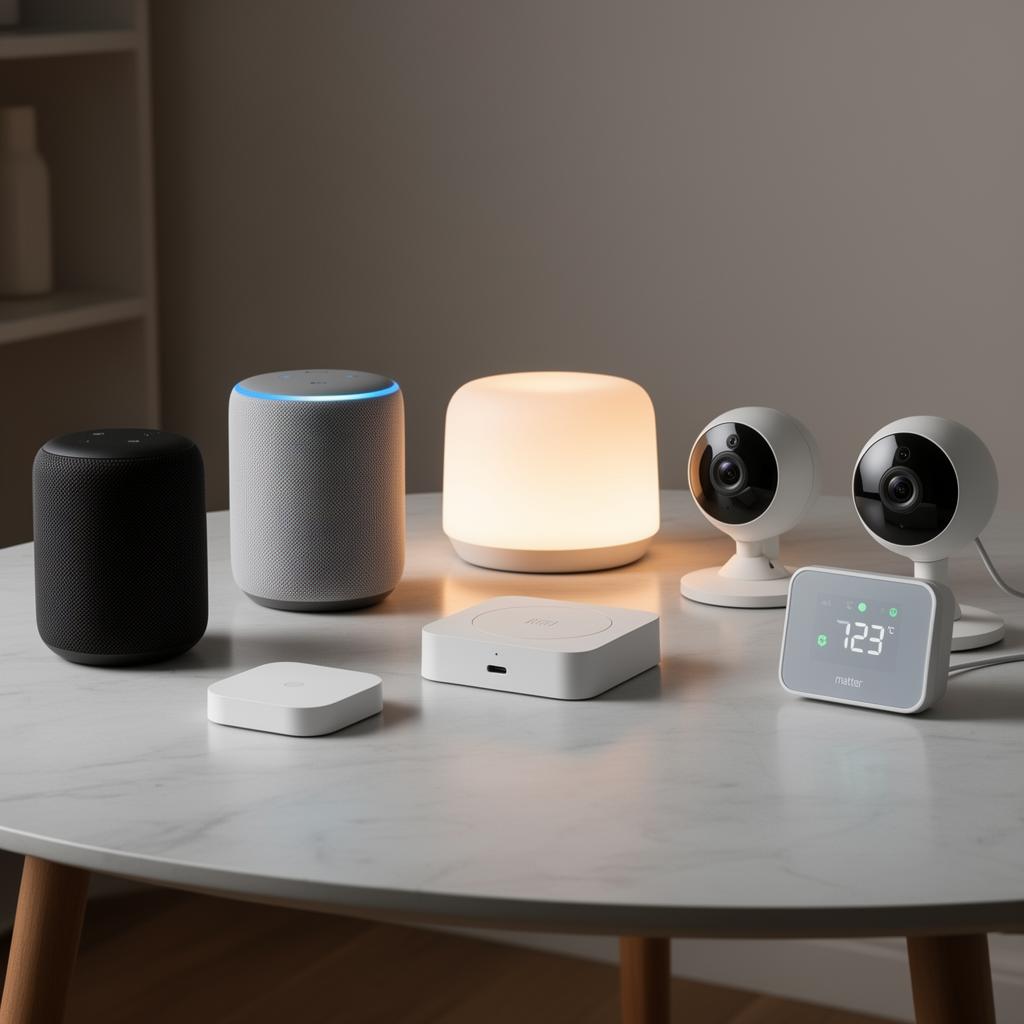
The Matter standard is unifying smart home compatibility — brands must clearly indicate Matter certification in structured data
Structured Product Data for Electronics AI
Here is the difference between product data that gets recommended and product data that gets ignored:
❌ Standard Electronics Product Data
Name: SmartBulb Pro
Description: Smart LED bulb with millions of colors.
Connectivity: Wi-Fi
Price: $24.99
✅ AI-Ready Electronics Product Data
{
  "name": "SmartBulb Pro RGBW",
  "category": "Smart Home > Lighting > Smart Bulbs",
  "connectivity": {
    "protocols": [ "Matter", "Thread", "Bluetooth"],
    "wifi_required": false,
    "hub_required": "Thread border router (included in HomePod Mini, Echo 4th gen)",
    "hub_included": false
  },
  "platform_compatibility": {
    "apple_homekit": true,
    "google_home": true,
    "amazon_alexa": true,
    "samsung_smartthings": true,
    "home_assistant": true
  },
  "specs": {
    "lumens": 1100,
    "color_temp_range_k": "2200-6500",
    "color_range": "16 million colors",
    "wattage": 9,
    "equivalent_wattage": 75,
    "bulb_type": "A19",
    "base_type": "E26",
    "dimmable": true,
    "lifetime_hours": 25000
  },
  "setup": {
    "complexity": "easy",
    "estimated_time_min": 5,
    "app_required": "Manufacturer App or native Home app",
    "tools_required": "none"
  },
  "energy": {
    "energy_star": true,
    "annual_energy_cost_usd": 1.08,
    "standby_power_w": 0.5
  },
  "use_cases": [ "ambient_lighting", "task_lighting", "circadian_rhythm", "entertainment"],
  "certifications": [ "Matter 1.4", "Energy Star", "FCC", "UL Listed"],
  "in_box": [ "1x Smart Bulb", "Quick Start Guide"],
  "requires_separate_purchase": [ "Thread border router if not already owned"],
  "previous_model": "SmartBulb v2",
  "upgrade_benefits": "Matter support, Thread mesh networking, 20% brighter"
}
The Matter Standard: Why It Changes Everything
Matter is the unified smart home connectivity standard backed by Apple, Google, Amazon, and Samsung. As of 2026, Matter is at version 1.4 with support expanding beyond basic on/off control to include cameras, robot vacuums, energy management, and ambient sensing. For AI discovery, Matter certification serves as a strong compatibility signal — an AI system can confidently recommend a Matter-certified device to any customer regardless of their platform.
Structured data implications:
- Include Matter version explicitly. "Matter 1.4" is more useful to AI than generic "Matter compatible." Version determines feature support.
- Specify Thread vs. Wi-Fi Matter. Thread-based Matter devices join mesh networks with lower latency. This matters for automation-heavy setups.
- Document border router requirements. Thread devices need a border router. Specify which devices serve this role (HomePod Mini, Echo 4th gen, etc.).
- List supported device types per Matter spec. Not all Matter features are supported by all controllers. Be explicit about what works where.
Contextual Specs: Beyond Raw Numbers
Raw specifications without context lead to commoditized AI recommendations. "Battery life: 8 hours" means nothing without context. Brands should provide contextual specifications:
| Raw Spec | Contextual Spec (AI-Useful) |
|---|---|
| Battery: 8 hours | 8 hrs with ANC on, 12 hrs without ANC, 6 hrs with high-res audio |
| Range: 100 ft | 100 ft line-of-sight, 40 ft through 2 walls, 25 ft through floor/ceiling |
| Water resistance: IP67 | IP67 — submersible 1m for 30 min. Safe for rain, splashes, shower. Not for swimming. |
| Camera: 2K resolution | 2K resolution. Night vision to 30 ft. 130° field of view. Recognizes faces at up to 15 ft. |
Wearables: The Subscription Transparency Problem
Wearable technology — smartwatches, fitness trackers, health monitors — has a growing data transparency problem: many features require paid subscriptions that are not immediately apparent. AI systems that discover subscription requirements post-recommendation erode customer trust.
Wearable product data should include:
- Features available without subscription vs. features requiring paid plan — as a structured comparison.
- Subscription pricing — monthly and annual costs, family plan options.
- Phone OS compatibility — iOS-only, Android-only, or cross-platform, with feature parity notes.
- Health sensor capabilities — heart rate accuracy class, SpO2, ECG (FDA-cleared?), sleep staging, temperature.
- Band/strap ecosystem — proprietary vs. standard lug width, availability of third-party bands.
Schema Markup for Electronics
Electronics product pages should use extended Product schema with additionalProperty for compatibility data:
{
  "@context": "https://schema.org",
  "@type": "Product",
  "name": "SmartBulb Pro RGBW",
  "brand": {"@type": "Brand", "name": "ExampleTech"},
  "additionalProperty": [
    {"@type": "PropertyValue", "name": "Smart Home Protocol", "value": "Matter 1.4, Thread"},
    {"@type": "PropertyValue", "name": "Platform Compatibility", "value": "Apple HomeKit, Google Home, Amazon Alexa, Samsung SmartThings"},
    {"@type": "PropertyValue", "name": "Hub Required", "value": "Thread border router"},
    {"@type": "PropertyValue", "name": "Setup Complexity", "value": "Easy — 5 minutes, no tools"}
  ]
}
Avoiding Spec-Sheet Commoditization
The biggest risk for electronics brands in AI-mediated discovery is commoditization. When AI systems compare products purely on specifications and price, premium brands lose differentiation. Three strategies to counter this:
- Provide use-case narratives in structured data. Include structured "best for" attributes — not just specs but what the product excels at. "Best for: apartment dwellers who want ambient lighting with circadian rhythm support."
- Invest in expert reviews and editorial coverage. AI systems heavily weight third-party expert evaluations. Products with strong reviews from Wirecutter, RTINGS, or Tom's Guide get recommended more frequently than products with only spec sheets.
- Build ecosystem depth. Products that integrate deeply with popular platforms and have documented automation capabilities get recommended when AI agents match products to customer setups. Document your integrations in detail.
Action Plan for Electronics Brands
- Standardize compatibility data. Create machine-readable fields for every platform, protocol, and ecosystem your products support. Include version numbers.
- Add contextual specs. Supplement raw specifications with real-world performance data and conditional context.
- Document the full accessory and component ecosystem. What comes in the box, what needs separate purchase, what existing devices are required.
- Be transparent about subscriptions. Clearly structure which features are free vs. paid, with pricing data.
- Implement Product schema with additionalProperty. Include compatibility, protocols, setup complexity, and use-case data.
- Publish comparison and setup content. Detailed guides that AI systems can reference when making recommendations and answering setup questions.
Frequently Asked Questions
Why do electronics brands risk commoditization from AI systems?
Electronics have highly quantifiable specs that AI systems can easily compare. Without use-case context, ecosystem value, and real-world performance data, AI defaults to price-performance comparisons that strip away brand differentiation and premium positioning.
What is Matter and why does it matter for AI discovery?
Matter is the unified smart home standard backed by Apple, Google, Amazon, and Samsung. Products with Matter certification can be confidently recommended by AI to any customer regardless of their platform. Include the specific Matter version (e.g., 1.4) and transport protocol (Thread vs. Wi-Fi) in your structured data.
How should electronics brands handle subscription dependencies in product data?
Be completely transparent. Structure a clear comparison of features available without subscription vs. features requiring paid plans. Include pricing. AI agents that discover hidden subscription requirements post-recommendation will reduce trust in the brand and lower future recommendation confidence.
What is the most valuable data for smart home AI discovery?
Protocol and platform compatibility data. A customer asking "will this work with my HomeKit setup" needs a definitive yes or no. Structure platform support, protocol details (Matter version, Thread vs. Wi-Fi), hub requirements, and border router dependencies as machine-readable attributes.
How do contextual specs improve AI recommendations?
Raw specs ("battery: 8 hours") are ambiguous. Contextual specs ("8 hours with ANC, 12 without, 6 with high-res audio") let AI make accurate recommendations for specific use cases. A customer who needs all-day battery for commuting gets different advice than one who needs maximum audio quality for short sessions.