
Optimizing Health and Wellness Product Data for AI Discovery
Health and wellness products face unique AI discovery challenges: regulatory compliance, ingredient form specificity, and safety-aware recommendations. This guide covers supplement data structuring, FDA claims management, bioavailability data, subscription modeling, and schema markup for wellness brands.
Health and wellness ecommerce is growing rapidly — the U.S. dietary supplement market alone reached $62.6 billion in 2024 — but it operates under regulatory constraints that make AI-mediated product discovery significantly more complex than other verticals. Supplements cannot make medical claims. Ingredient interactions matter. Dosage recommendations vary by individual. And consumer trust is especially fragile in a category where product quality directly affects wellbeing.
For AI systems, this creates both opportunity and risk. The opportunity: customers genuinely need expert guidance when choosing supplements, nutrition products, and wellness items. The risk: AI systems may generate health claims that cross regulatory boundaries or make recommendations without adequate safety context. Brands that structure their data correctly will be discoverable and compliant. Those that do not will be either invisible or exposed to regulatory liability.
The Compliance Reality
The 2026 FDA regulatory landscape for supplements is tightening. DSHEA (Dietary Supplement Health and Education Act) remains the governing framework, with 21 CFR Part 111 GMPs and NDI (New Dietary Ingredient) notifications as enforcement priorities. AI systems recommending supplements must work within these boundaries — which means brands must provide the guardrails through structured data.
How AI Systems Handle Health Product Queries
A customer asking "what magnesium supplement should I take for sleep" triggers a complex evaluation chain. An effective AI system needs to distinguish between magnesium forms (glycinate for sleep vs. citrate for digestion vs. oxide for general supplementation), check for medication interactions, consider dosage relative to the RDA, and recommend products with third-party testing verification.
This requires data most supplement brands do not currently provide in machine-readable format:
| AI Evaluation Step | Function | Data Required From Brand |
|---|---|---|
| Needs Assessment | Maps customer goals to product categories | Health goal tags (sleep, energy, immunity, stress, joint health) |
| Ingredient Form Evaluation | Assesses bioavailability and specific-form benefits | Specific ingredient forms (not just "magnesium" but "magnesium glycinate") |
| Safety Check | Screens for interactions and contraindications | Known interactions, pregnancy/nursing warnings, age restrictions |
| Trust Verification | Validates quality through certifications | NSF, USP, ConsumerLab, GMP certifications as structured attributes |
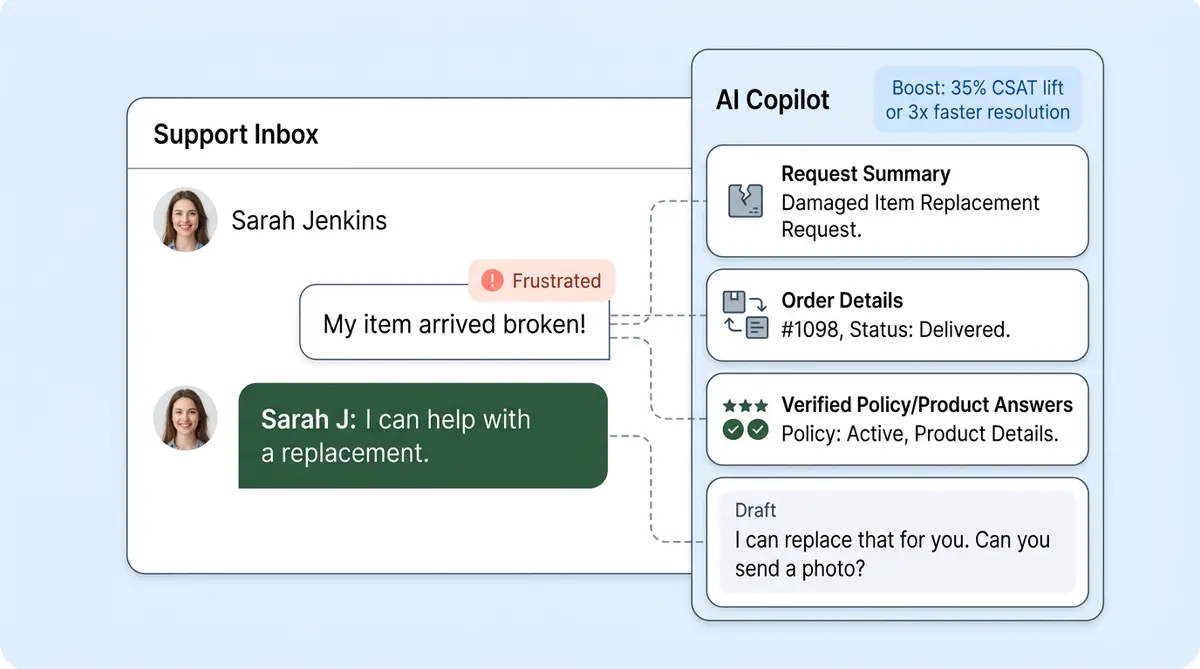
Source: Alhena AI — compliance-safe AI support for health and supplement brands
Structured Product Data for Supplements
Here is what AI-ready supplement product data looks like versus the minimum most brands provide:
❌ Typical Supplement Product Data
Name: Sleep Support Complex
Description: Natural sleep support with magnesium and melatonin.
Servings: 60 capsules
Price: $29.99
✅ AI-Ready Supplement Product Data
{
  "name": "Sleep Support Complex — Magnesium Glycinate + L-Theanine",
  "category": "Supplements > Sleep & Relaxation",
  "supplement_facts": {
    "serving_size": "2 capsules",
    "servings_per_container": 30,
    "ingredients": [
      {
        "name": "Magnesium (as Magnesium Glycinate)",
        "amount_mg": 400,
        "daily_value_pct": 95,
        "form_note": "Glycinate form — highest bioavailability for sleep and relaxation"
      },
      {
        "name": "L-Theanine",
        "amount_mg": 200,
        "daily_value_pct": null,
        "form_note": "Suntheanine® patented form"
      },
      {
        "name": "Melatonin",
        "amount_mg": 3,
        "daily_value_pct": null,
        "form_note": "Synthetic, pharmaceutical-grade"
      }
    ]
  },
  "health_goals": [ "sleep_quality", "relaxation", "stress_reduction"],
  "approved_claims": [ "Supports restful sleep", "Promotes relaxation", "Helps maintain healthy magnesium levels"
  ],
  "prohibited_claims": [ "Treats insomnia", "Cures sleep disorders", "Clinically proven to improve sleep"
  ],
  "certifications": [ "NSF Certified for Sport", "GMP Certified", "Non-GMO Project Verified"],
  "allergen_info": {
    "gluten_free": true,
    "dairy_free": true,
    "soy_free": true,
    "vegan": true
  },
  "dietary_compliance": [ "vegan", "keto", "paleo", "gluten_free"],
  "usage": {
    "recommended_dose": "2 capsules",
    "timing": "30-60 minutes before bed",
    "with_food": "optional",
    "frequency": "daily"
  },
  "warnings": [ "Consult physician if pregnant, nursing, or taking medications", "May interact with blood pressure medications", "May cause drowsiness — do not operate machinery"
  ],
  "supply_duration_days": 30,
  "subscription_available": true,
  "subscription_discount_pct": 15
}
The Claims Compliance Framework
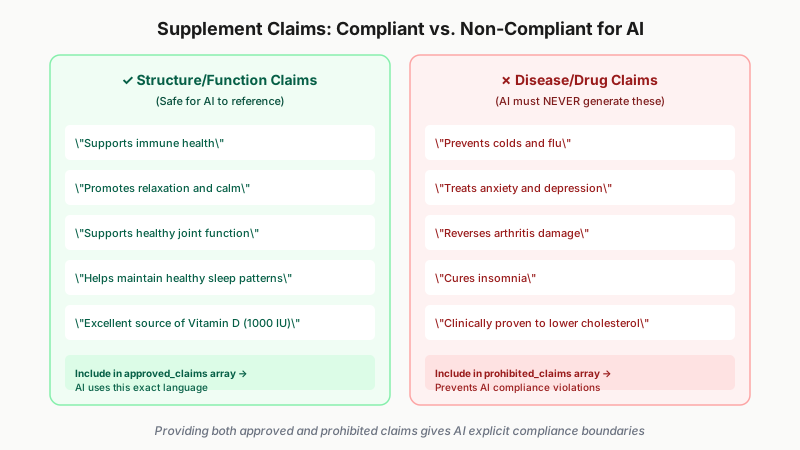
The distinction between structure/function claims and disease claims is the most critical compliance boundary in health ecommerce. AI systems regularly blur this line when paraphrasing product descriptions. Brands must provide explicit guardrails:
| Claim Type | Example (Compliant) | Example (Non-Compliant) |
|---|---|---|
| Structure/Function | "Supports immune health" | "Prevents colds and flu" |
| Nutrient Content | "Excellent source of Vitamin D (1000 IU)" | "Cures Vitamin D deficiency" |
| General Wellbeing | "Promotes relaxation and calm" | "Treats anxiety and depression" |
| Body Function | "Supports healthy joint function" | "Reverses arthritis damage" |
The practical approach: include both approved_claims and prohibited_claims in your structured product data. This gives AI systems explicit boundaries. An AI assistant referencing your product data will use your approved language rather than inventing its own — which is where compliance violations typically occur.
Ingredient Forms and Bioavailability Data
One of the biggest differentiators in supplement quality — and the one AI systems most need to understand — is ingredient form. "Magnesium" is not "magnesium." The specific form determines bioavailability, effectiveness, and appropriate use case:
| Ingredient | Form | Bioavailability | Best For |
|---|---|---|---|
| Magnesium | Glycinate | High | Sleep, anxiety, muscle relaxation |
| Magnesium | Citrate | Moderate-High | Digestion, general supplementation |
| Magnesium | Oxide | Low (4%) | Budget supplementation, laxative effect |
| Vitamin D | D3 (Cholecalciferol) | High | Preferred form, better absorption than D2 |
| Iron | Bisglycinate | High | Gentle on stomach, fewer GI side effects |
| Omega-3 | Triglyceride form | High | Better absorbed than ethyl ester form |
Include ingredient form data as structured attributes, not marketing copy. An AI system recommending magnesium for sleep should know to prefer glycinate over oxide — but only if this data is machine-readable.
Subscription and Replenishment Data
Health and wellness has among the highest subscription adoption rates in ecommerce. AI systems that can manage replenishment timing add genuine retention value. The data they need:
- Servings per container — exact count, not approximate.
- Recommended daily servings — with any range (e.g., "1-2 capsules").
- Calculated supply duration — "30-day supply at recommended dosage" as a structured field.
- Subscription pricing with discount — one-time price vs. subscription price, discount percentage.
- Auto-ship flexibility — can customers pause, skip, or adjust frequency? Document this as structured data for AI agents managing subscriptions.
Schema Markup for Health Products
Health product pages need Product schema that includes supplement-specific attributes and clear claim boundaries:
{
  "@context": "https://schema.org",
  "@type": "Product",
  "name": "Sleep Support Complex — Magnesium Glycinate + L-Theanine",
  "brand": {"@type": "Brand", "name": "ExampleWellness"},
  "description": "Supports restful sleep with 400mg magnesium glycinate, 200mg L-Theanine, and 3mg melatonin. 30-day supply. NSF Certified for Sport.",
  "additionalProperty": [
    {"@type": "PropertyValue", "name": "Health Goal", "value": "Sleep Support, Relaxation"},
    {"@type": "PropertyValue", "name": "Key Ingredient", "value": "Magnesium Glycinate 400mg"},
    {"@type": "PropertyValue", "name": "Certification", "value": "NSF Certified for Sport, Non-GMO Project Verified"},
    {"@type": "PropertyValue", "name": "Dietary", "value": "Vegan, Gluten-Free, Soy-Free"},
    {"@type": "PropertyValue", "name": "Supply Duration", "value": "30 days"}
  ]
}
Action Plan for Health and Wellness Brands
- Structure supplement facts as machine-readable data. Go beyond PDF labels. Create structured JSON for every ingredient with specific forms, amounts, and %DV.
- Build an approved claims library. Document exact language AI systems should use for each product. Include prohibited claims to establish explicit boundaries.
- Map products to health goals. Create structured attributes linking products to specific wellness outcomes: sleep, energy, immunity, joint health, digestion.
- Document ingredient forms and bioavailability. Specify which form of each ingredient you use, its bioavailability, and why it was chosen.
- Include subscription and supply duration data. Servings per container, daily use, calculated supply length, and subscription pricing.
- Add allergen and dietary compliance as structured attributes. Gluten-free, vegan, kosher, halal — as boolean fields, not marketing copy.
- Monitor AI-generated descriptions monthly. Search your products in ChatGPT, Perplexity, Google AI Mode. Flag any claims that cross from structure/function into disease claims.
Frequently Asked Questions
Why is health and wellness high-risk for AI product recommendations?
AI systems may generate health claims that cross regulatory boundaries (saying "treats insomnia" instead of "supports restful sleep"), recommend products without considering medication interactions, or simplify dosage guidance. Brands must provide explicit approved/prohibited claims boundaries in their structured data.
What is the difference between structure/function claims and disease claims?
Structure/function claims describe how a nutrient affects normal body function ("supports immune health"). Disease claims assert that a product prevents, treats, or cures a disease ("prevents colds"). Supplements may only make structure/function claims. AI systems regularly blur this line — brands must provide guardrails.
Why do ingredient forms matter so much for AI recommendations?
Different forms of the same ingredient have vastly different bioavailability and use cases. Magnesium glycinate (high bioavailability, best for sleep) vs. magnesium oxide (4% bioavailability, budget option) represent completely different recommendations. AI systems need this form data structured to make accurate suggestions.
What third-party certifications matter most for AI visibility?
NSF Certified for Sport (strongest athletic/quality signal), USP Verified (pharmaceutical-grade testing), ConsumerLab approved (independent testing), and Non-GMO Project Verified (ingredient sourcing). These are verifiable trust signals AI systems can reference when making recommendations, unlike unverified marketing claims.
How do subscription models work with AI product discovery?
AI agents that can calculate replenishment timing based on servings per container and recommended daily dosage can proactively suggest reorders — turning them into retention tools. Include supply duration, subscription pricing, discount percentage, and flexibility options (pause, skip, adjust) as structured data.