
Shoptalk 2026: When Agents Stop Being Hype and Start Running Retail
Shoptalk Spring 2026 showed how quickly retail AI has moved from demos to operating logic. The real conversation was no longer whether agents matter, but which parts of discovery, merchandising, support, and store operations brands are ready to let AI influence next.
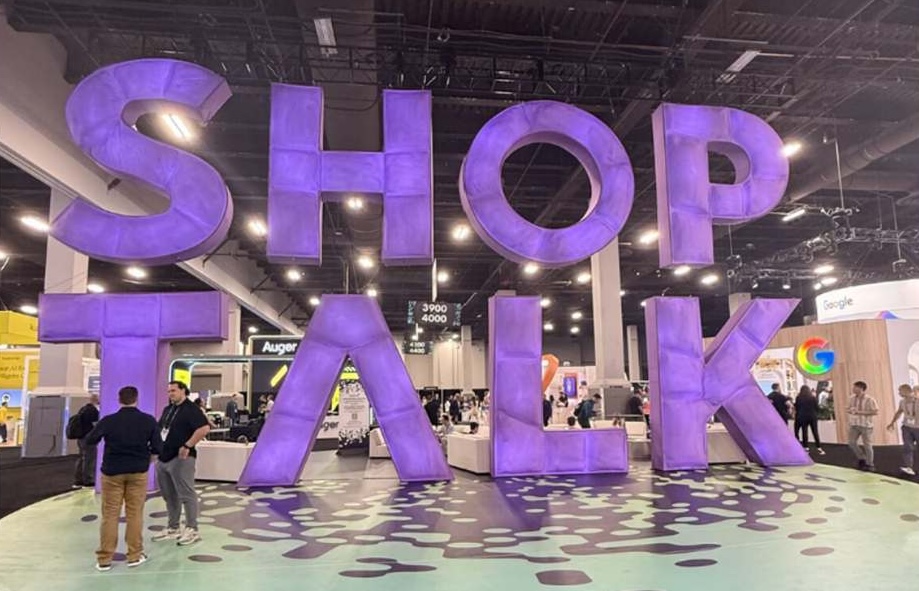
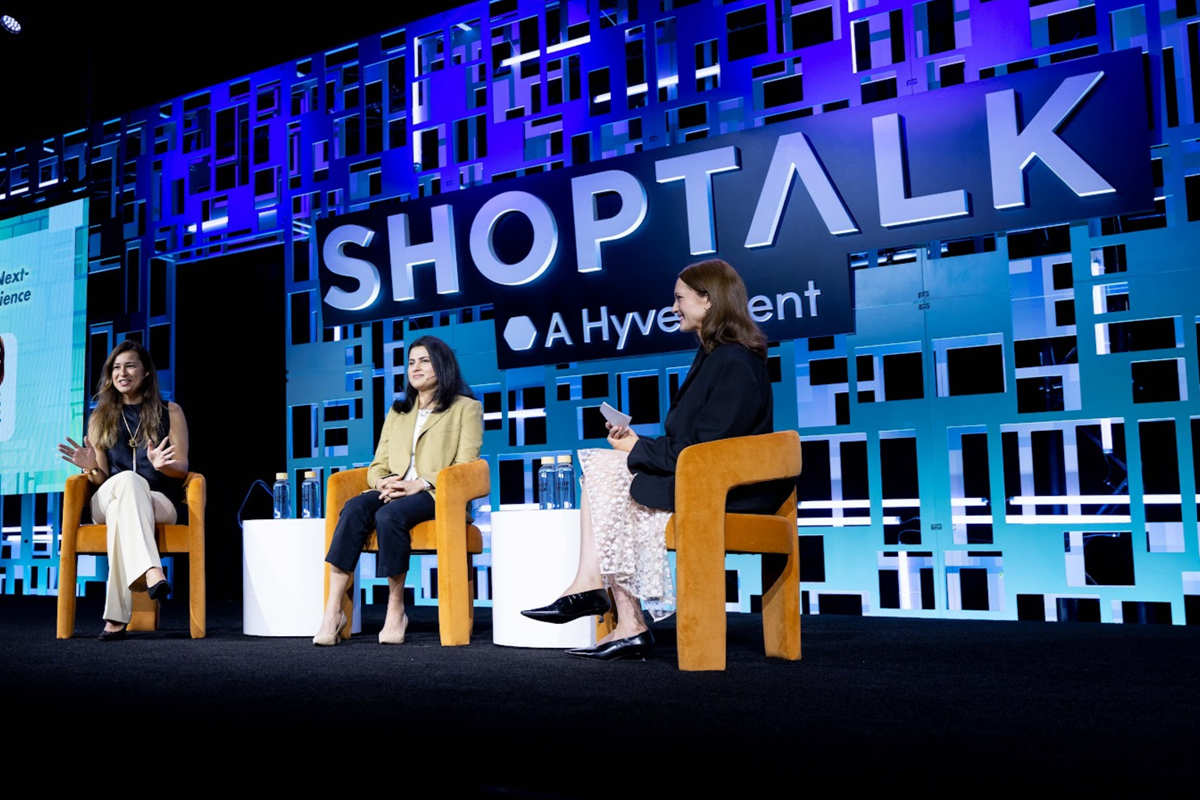
By the time Shoptalk Spring 2026 wrapped at Mandalay Bay, the mood around retail AI had changed. The industry is still full of hype, of course, but the center of gravity is moving away from novelty and toward execution.
That was the clearest signal from the event's agenda and hallway conversations alike. Shoptalk's 2026 theme was Retail in the Age of AI, and that framing mattered because it treated artificial intelligence as a management question, not just a feature question. Retail leaders were no longer asking whether AI belonged in the stack. They were asking where it should sit in discovery, merchandising, service, and store operations, and what kind of control humans would keep.
Short Answer
Shoptalk 2026 showed that retail AI has crossed into mainstream planning. The biggest shift was not that agents were everywhere. It was that executives were starting to treat AI agents, answer engines, and machine-readable commerce data as practical infrastructure for demand generation and operational efficiency.
Why Shoptalk 2026 mattered
Shoptalk is useful because it acts like a pressure test for mainstream commerce priorities. When the agenda gives prime placement to debates about agentic shopping, sessions on AI-powered physical retail, and workshops on answer-engine visibility, that tells you where senior operators think the next few years of risk and advantage will come from.
- AI moved from side topic to event theme. In 2026, AI was not tucked into a few innovation sessions. It was woven throughout the program.
- Agentic commerce entered the serious zone. A dedicated debate asked whether shoppers will actually let agents make decisions and complete purchases on their behalf.
- Discovery became a data problem. Sessions on answer engines and product discovery made it clear that machine-readable product data is becoming part of retail acquisition strategy.
- Stores stayed relevant. The event also spent time on AI inside physical retail, not just on digital assistants and checkout flows.
What agentic commerce means in plain English
Agentic commerce means software that does more than assist. An agent can interpret a goal, compare options, apply constraints, and take action inside defined boundaries. In shopping, that can mean helping a buyer research products, narrow trade-offs, recommend the best fit, and increasingly move toward purchase.
The important distinction is that an agent is not just answering a question. An agent is participating in the workflow.
| Concept | Simple definition | Why it matters for retailers |
|---|---|---|
| AI assistant | Helps answer questions or summarize options | Improves convenience, but often leaves the human fully in charge |
| AI shopping agent | Researches, compares, and can guide or initiate the next step | Starts to influence demand capture and product selection |
| Agentic commerce infrastructure | The data, policies, APIs, and checkout logic agents rely on | Determines whether a brand can be found, understood, and transacted with in AI interfaces |
The real shift: AI is becoming retail plumbing
One reason Shoptalk felt different is that the agenda did not present AI as a string of isolated wow moments. It treated AI as a practical layer across functions: planning, personalization, discovery, service, and store operations. That is what happens when a technology leaves the lab and starts touching budgets, workflows, and accountability.
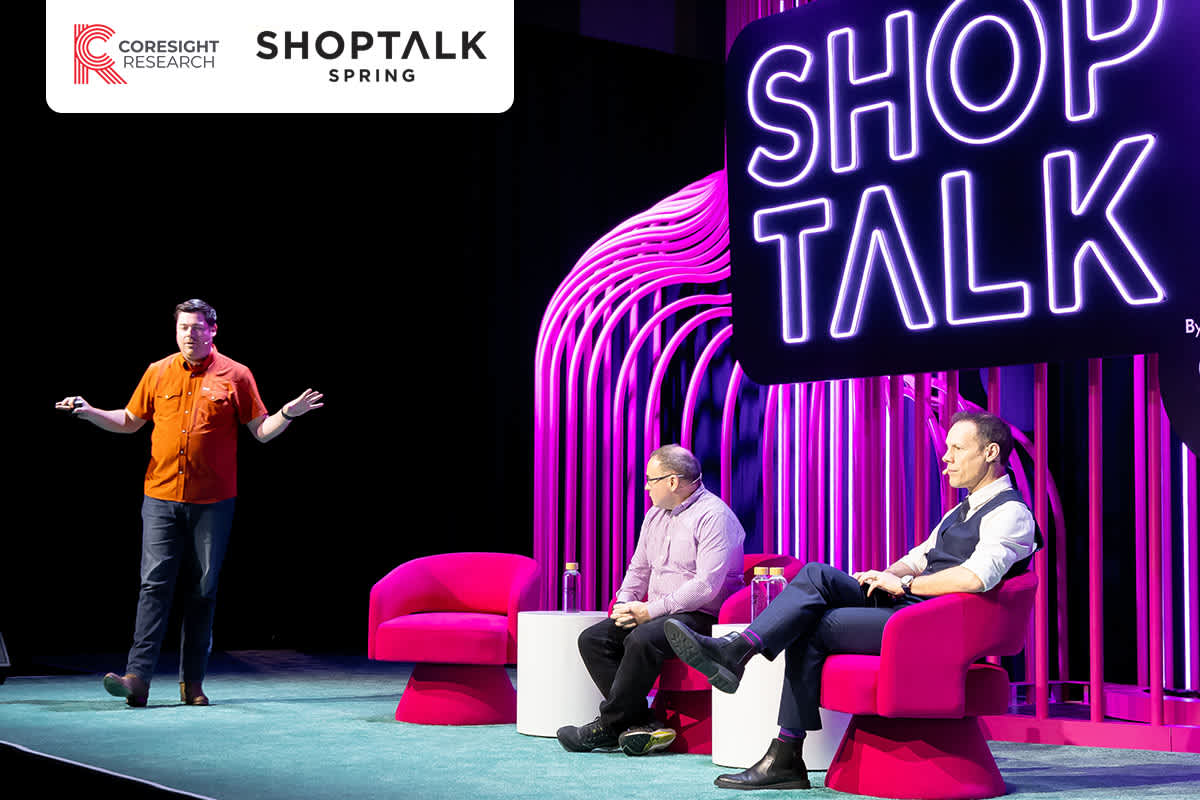
The most revealing session title may have been the debate itself: AI Agents Will / Will Not Transform Retail. Retail conferences do not usually devote debate-stage real estate to a concept unless it has become strategically unavoidable. The fact that the argument has shifted from whether AI matters to how far shoppers and brands will let it go is the signal.
For Zero Click Project readers, the implication is straightforward: AI is becoming part of the operating system for commerce. Brands that still treat it as a campaign add-on are likely to underestimate how quickly machine-mediated discovery can reshape who wins the first consideration set.
Discovery is moving outward from the storefront
Another major Shoptalk signal was the growing importance of AI answer engines. A sponsored session on winning product discovery in the age of answer engines made the issue explicit: visibility increasingly depends on whether a product detail page can be interpreted by systems that summarize, compare, and recommend before a shopper ever lands on a traditional site.
That lines up with the broader platform shift now underway. Shopify's partnership with OpenAI and its rollout of Agentic Storefronts make the same point from the infrastructure side. Product data is no longer only for on-site search, feeds, and marketplaces. It is becoming source material for AI-native shopping surfaces.
That is why this topic matters beyond the conference stage. Once discovery starts happening inside ChatGPT, Copilot, Google AI Mode, Gemini, and similar interfaces, the brand homepage matters less as the front door. Structured catalogs, inventory quality, policy clarity, and trustworthy product context matter more.
This is where a lot of retail teams are still underprepared. Many merchants have enough product data to power their own storefront, but not enough consistency to perform well when an external agent or answer engine tries to compare them against alternatives in real time.
Physical stores did not disappear from the AI story
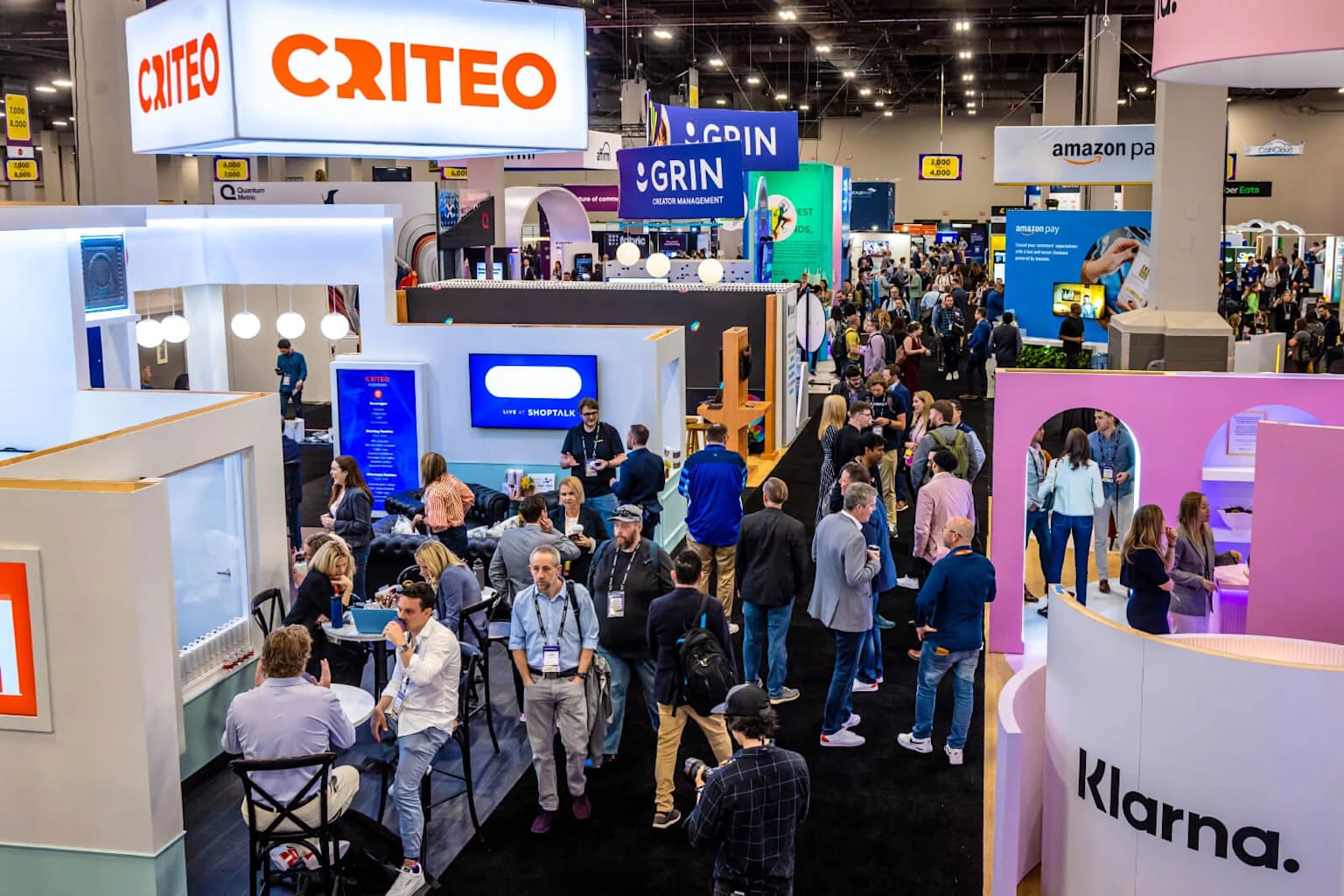
One of the healthier signs at Shoptalk 2026 was that the event did not collapse the future of commerce into a purely digital agent narrative. A session on AI applications for in-store physical retail focused on smart fitting rooms, associate copilots, real-time recommendations, and the practical challenge of getting from pilot to chainwide rollout.
That matters because physical retail still has a strong role to play if digital discovery becomes more agent-mediated. When online research compresses faster, stores have to become better at consultation, reassurance, and operational precision. AI can help with that, but only if it is integrated into store workflows instead of bolted on as a gimmick.
In other words, the rise of agents does not make stores irrelevant. It raises the bar for what stores need to do well once an AI system has already narrowed the decision set.
The underlying anxiety is really about control
Shoptalk's optimism came with a visible layer of unease. Retailers want speed, automation, and lower operating friction, but they also know what is at stake when decision-making moves into models, workflows, and third-party platforms they do not fully control.
That anxiety usually showed up in four forms:
- Discovery control: Who owns the relationship if the first recommendation happens inside an AI interface?
- Data quality: Can the brand trust its own catalog, pricing, availability, and policy data enough to let agents act on it?
- Governance: What rules define when AI can recommend, escalate, or transact?
- Measurement: How do teams judge success once AI affects more than clicks and starts affecting decision speed, margin, and conversion quality?
Those are not abstract concerns. They are the real work of moving from AI experimentation to AI operations.
What commerce teams should do next
The practical takeaway from Shoptalk 2026 is not to launch an agent for the sake of launching one. It is to make the business legible and trustworthy enough for agentic interfaces to work.
- Audit product data for machine readability. Clean up titles, attributes, availability, pricing logic, shipping expectations, and returns language so external systems can interpret them consistently.
- Treat AI answer engines as a discovery surface. Rewrite important category pages and PDPs so they answer common buying questions clearly and early.
- Pick one bounded workflow to automate. Merchandising, service triage, or product discovery are better starting points than trying to automate the entire customer journey at once.
- Build visible trust guardrails. Show why a recommendation appeared, where the shopper can override it, and when a human can step in.
- Measure business outcomes, not just engagement. If AI is doing real work, evaluate it against conversion quality, margin, support efficiency, and decision speed.
Teams that do this well will be easier for AI systems to recommend, easier for shoppers to trust, and harder for competitors to outrank in machine-mediated discovery.
The bottom line
Shoptalk 2026 did not prove that autonomous buying has arrived everywhere. It showed something more important: serious retail operators are now organizing around the possibility that agents, answer engines, and AI-guided workflows will become normal parts of commerce.
That means the near-term advantage will go to brands that make themselves easy for machines to understand and safe for customers to trust. The storefront is still important. But it is no longer the only place where commerce begins.
Key terms from this article
Agentic commerce: commerce workflows where AI systems can evaluate options and take bounded action, not just provide suggestions.
AI answer engine: an interface like ChatGPT or Google AI Mode that summarizes, compares, and recommends without behaving like a classic results page.
Machine-readable catalog: product and policy data structured clearly enough for external AI systems to interpret and use reliably.
Frequently Asked Questions
What was the biggest message from Shoptalk 2026?
The biggest message was that retail AI is becoming operational. The event treated agents, answer engines, and AI-assisted workflows as real planning priorities rather than experimental side projects.
Why does Shoptalk 2026 matter for agentic commerce?
Because it showed that mainstream retail leaders are now debating not just whether agents exist, but where they should sit in discovery, service, merchandising, and purchase flow.
Did Shoptalk suggest physical stores are becoming less important?
No. The event made the opposite point. As digital discovery gets compressed by AI, stores may become even more important for reassurance, service, and high-confidence conversion.
What should a brand do first if it wants to prepare for agentic commerce?
Start by improving machine-readable product data and rewriting important pages so both shoppers and AI systems can understand them quickly. Most teams should fix data and trust layers before launching more ambitious agent experiences.
References & Further Reading
[1] 2026 Agenda - Shoptalk Spring
[2] Debate: AI Agents Will / Will Not Transform Retail - Shoptalk Spring
[3] AI Applications for In-Store Physical Retail - Shoptalk Spring
[4] Winning Product Discovery in the Age of AI Answer Engines - Shoptalk Spring
[5] Shopify and OpenAI bring commerce to ChatGPT - Shopify
[6] The agentic commerce platform: Shopify connects any merchant to every AI conversation - Shopify
Continue Exploring
Shoptalk Spring 2026 Event Page
See the event profile, dates, and why Shoptalk matters in the agentic commerce calendar.
7 Practical Site Changes Retailers Should Make for AI-Powered Buying
A practical checklist for making PDPs, policies, and checkout easier for AI systems to interpret.
How to Get Agentic AI to Recommend Your Ecommerce Site
A deeper guide to the content, trust, and structured data signals AI systems use when recommending brands.