
AI Finds the Product. Humans Still Close the Sale: What a New Global Shopping Survey Signals for Brands
A new international shopping survey across eight cities shows a pattern commerce teams should take seriously: AI is becoming a normal way to discover products and narrow options, but human support still matters when the journey moves closer to service issues and payment.
The next phase of ecommerce will not be fully human-led, and it will not be fully autonomous either. It will be hybrid. That is the clearest message from a newly released 2026 international shopping survey that tracked online buying behavior across Tokyo, Seoul, Shanghai, Mumbai, Bangkok, Jakarta, London, and Los Angeles.
For DTC brands, multi-channel retailers, agencies, and commerce platforms, that matters because it turns a vague AI conversation into a channel strategy question. Where is AI already becoming a normal part of shopping? Where do people still want a person involved? And how different is that answer by market?
In simple terms, the research suggests that AI is becoming the new front door to commerce. Shoppers are comfortable using it to find products, get recommendations, and narrow choices. But when shoppers need reassurance or confidence before payment, people still play an important role.
Short Answer
The survey shows three things at once: AI is strongest in product discovery, support and purchase remain more human-sensitive, and social platforms are becoming real buying channels in most major markets.
What the Research Covered
The study was fielded from January 28 to February 10, 2026, and surveyed 2,560 online shoppers ages 15 to 49. Each city contributed 320 respondents, and every respondent had purchased online within the last year. The survey was conducted online in local languages using a global panel.
The international scope is one of the most useful parts of the study. The strongest signals come from several Asian cities, especially Shanghai, Bangkok, and Mumbai, while Tokyo remains a clear outlier on the lower-adoption side. London and Los Angeles sit in the middle, which is useful for brands trying to benchmark Western market readiness without assuming one global curve.
The release comes from transcosmos, which has run versions of this multi-city online shopping study before. That makes the 2026 findings more useful than a one-off snapshot.
Key Findings at a Glance
- AI is most accepted at the start of the journey. Product search is the stage where consumers are most willing to let AI take the lead.
- Intent is higher than current usage. Shoppers in all eight cities show interest in using AI shopping tools more often than they do today.
- Support and purchase are more contested. Consumers in several markets still prefer human help when a purchase becomes higher-stakes.
- Social commerce is no longer niche. Adoption increased year over year in every surveyed city.
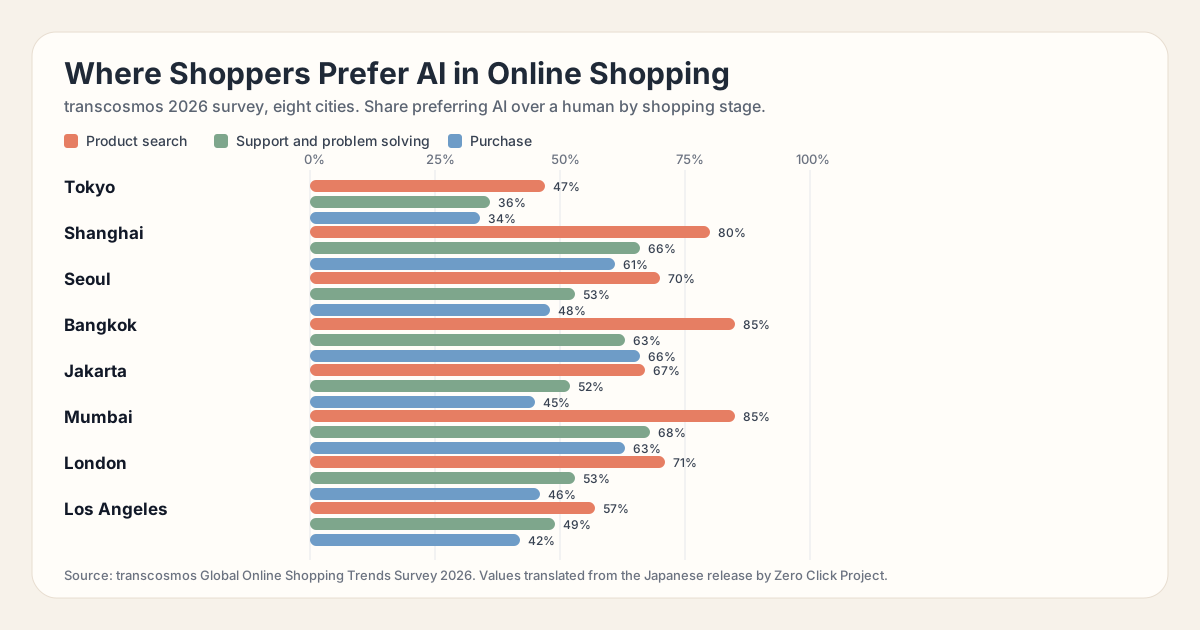
1. AI Is Becoming the Discovery Layer
The strongest finding in the research is not that people want AI to buy everything for them. It is that people increasingly want AI to help them find the right product.
The Japanese release and the English overview both point in the same direction: current use is highest at the discovery stage, and future intent remains even stronger. Product search is the most consistently accepted use case across markets, while recommendation and shopping-list tasks also score strongly.
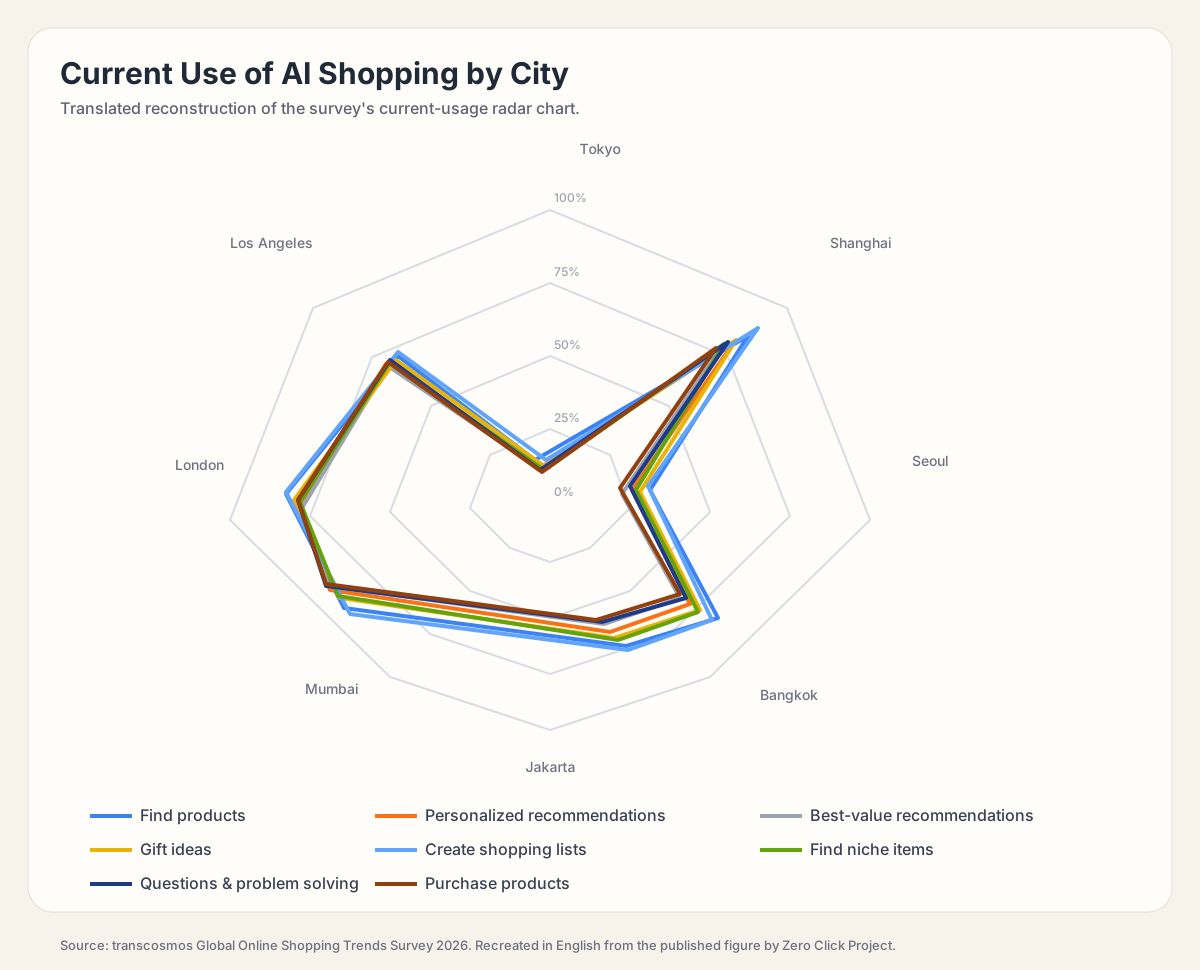
For brands, that means product data, specifications, FAQs, reviews, and category copy need to work well in answer-driven interfaces, not just on a classic category page. If AI is becoming the discovery layer, then clean product facts become part of acquisition.
2. Human Support Still Matters in the Shopping Process
The survey becomes more interesting in the later stages of the journey. Once the task shifts from finding a product to solving a problem or completing a purchase, the gap between AI and humans narrows.
transcosmos's Japanese release is especially helpful here because it separates customer-service preferences by stage. In support and problem solving, Tokyo drops to 36% in favor of AI, while Los Angeles is 49%, London and Seoul are both 53%, Jakarta is 52%, Shanghai is 66%, Bangkok is 63%, and Mumbai is 68%.
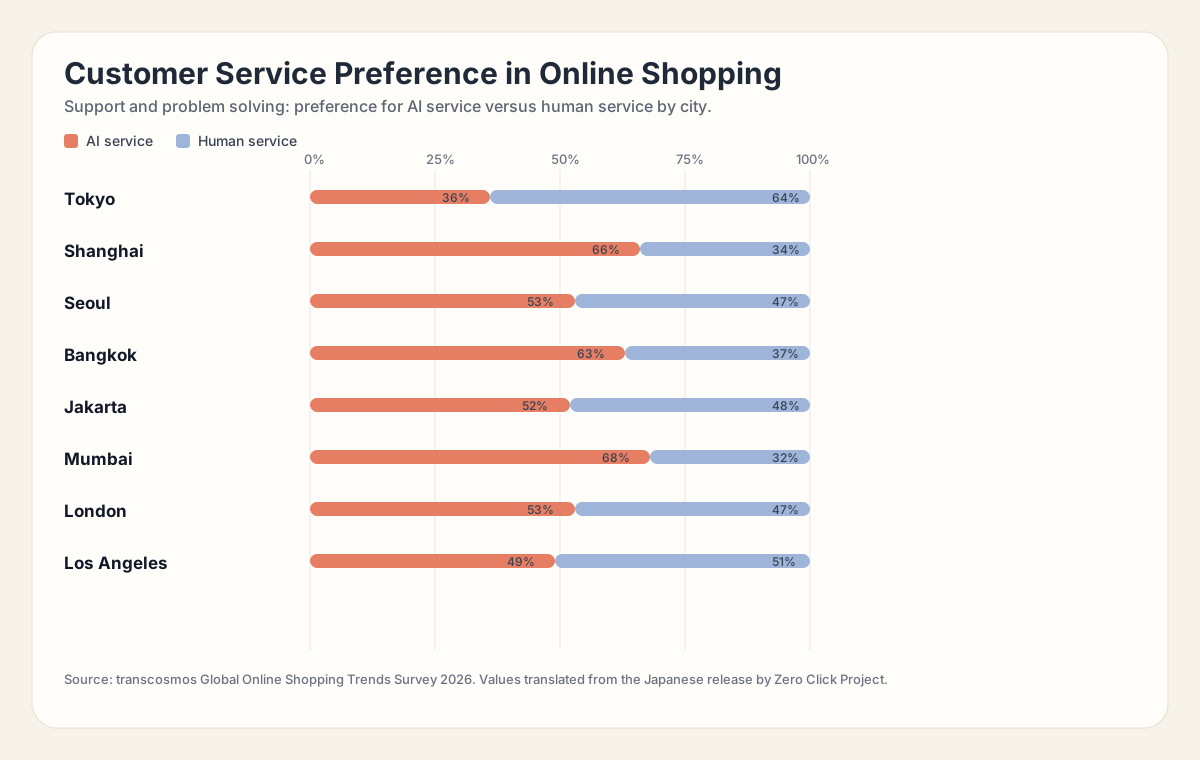
The simple interpretation is that shoppers do not treat every commerce step the same way. Searching is reversible. Support and payment feel accountable. When money, returns, service issues, and exceptions become more important, many shoppers still want a human safety net nearby.
This argues against an all-or-nothing AI strategy. Brands should automate discovery aggressively, but they should not assume that strong AI search adoption automatically means shoppers want a fully agentic support or checkout experience in every market.
3. Social Commerce Keeps Expanding, Including Outside Asia
The social commerce data is just as important. Adoption rose in every city surveyed. Tokyo increased from 16% in 2025 to 24% in 2026. Los Angeles rose from 52% to 67%. London moved from 59% to 71%. The highest-adoption cities were Bangkok at 95%, Shanghai at 93%, Jakarta at 90%, and Mumbai at 85%.
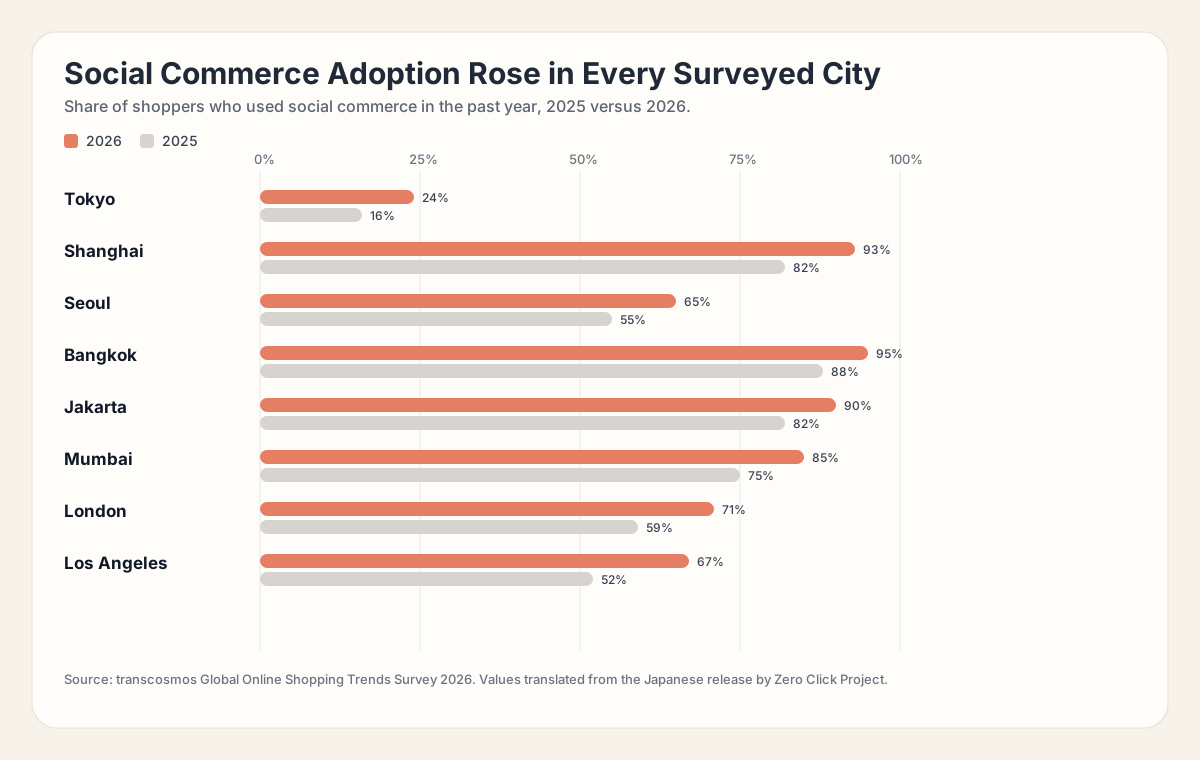
Platform behavior differs by city, but the release highlights a broader pattern. TikTok or Douyin leads in cities where TikTok Shop is active, including Shanghai, Bangkok, Jakarta, London, and Los Angeles. In Mumbai and Seoul, Instagram and YouTube are particularly strong.
What Brand and Agency Teams Should Do Next
For brands serving multiple markets, the main lesson is not simply to invest in AI. It is to match channel design to shopper comfort. Based on the underlying eight-city survey published by transcosmos, the smart move is to push hardest where the shopper is already comfortable letting software lead: discovery, comparison, and social-led browsing.
| Signal from the survey | What brands should do | Why it matters |
|---|---|---|
| AI is strongest in product search | Improve structured product data, comparison copy, and question-based content | AI systems need clean facts to recommend products accurately |
| Intent exceeds current usage | Prepare for higher assistant-led traffic, not just today's baseline | Consumer comfort with AI shopping is still rising |
| Support and purchase remain mixed | Keep human escalation visible in chat, service, and checkout journeys | Trust still breaks down near payment and problem resolution |
| Social commerce is growing everywhere | Treat TikTok, Instagram, and YouTube as commerce surfaces, not just media channels | Discovery and purchase are converging inside social environments |
| Markets adopt at different speeds | Localize AI and social strategy by region instead of forcing one global playbook | Bangkok and Tokyo are not on the same readiness curve |
For agencies, this creates a packaging opportunity. Clients increasingly need one connected offer that covers AI visibility, content readiness, social commerce operations, and human support design.
The Bottom Line
Brands should not read this research as proof that human commerce is disappearing. They should read it as proof that the shopping interface is splitting. AI is becoming a normal way to search and shortlist. Human support still matters when stakes rise. Social platforms are becoming a more direct route to purchase.
The winners will be the brands that prepare for machine-readable discovery, low-friction social buying, and clear human fallback when confidence matters most.
Frequently Asked Questions
What is the single most important takeaway for brands?
The highest-confidence takeaway is that AI should now be treated as a discovery channel. Brands that are still optimizing only for website navigation and keyword search are behind the way many shoppers now begin the journey.
Does the survey say consumers want fully autonomous buying?
No. The survey points to a hybrid model. Consumers are more comfortable with AI in discovery than in support or final purchase, especially in lower-adoption markets.
Why does social commerce matter in an AI commerce conversation?
Because both trends reduce the importance of the traditional homepage as the starting point. Discovery is moving outward, into assistants, feeds, video platforms, and other interfaces the brand does not fully control.
Why is the international sample important?
Because it shows that AI shopping behavior is not moving at one global speed. Brands need market-specific plans rather than assuming Tokyo, London, Bangkok, and Los Angeles will adopt the same behaviors at the same pace.